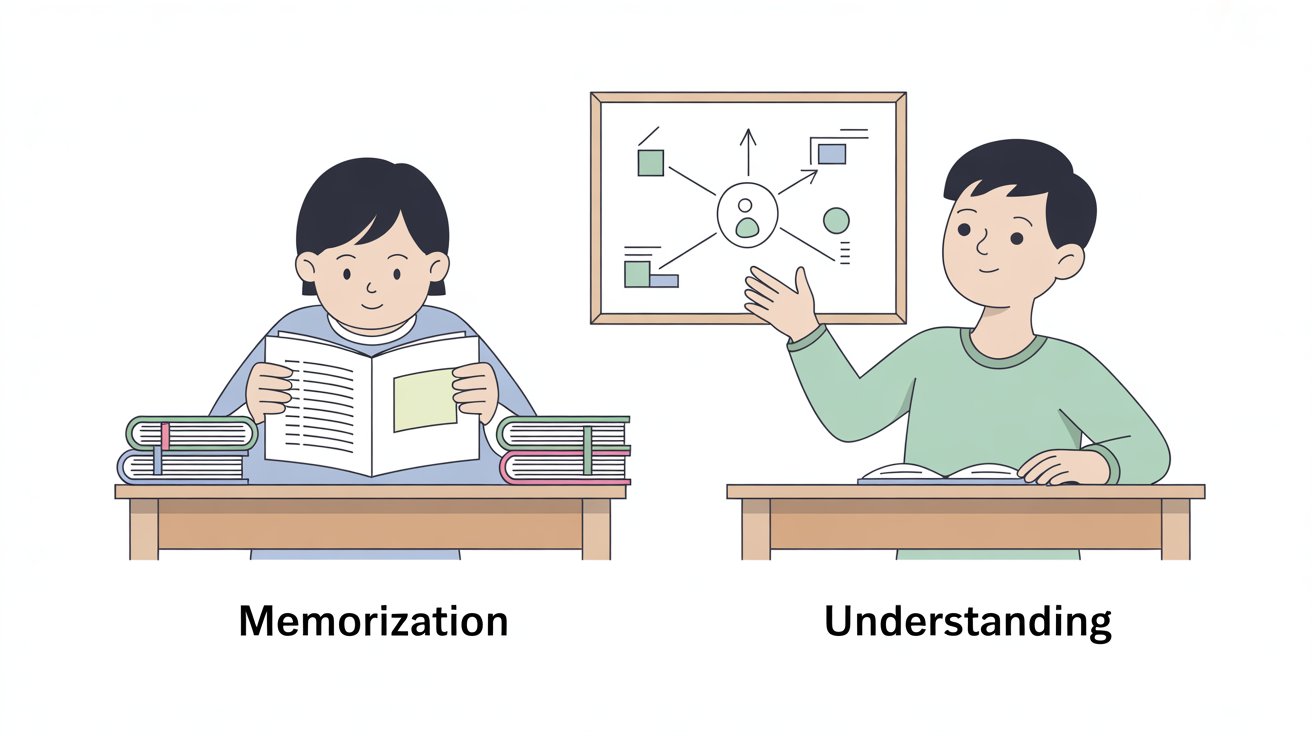
Students rely on memorization without understanding because it feels safe and efficient. As exams approach, repeating information seems like the fastest preparation method. Rereading notes and textbooks creates familiarity, which is often mistaken for knowledge.
This approach fails because it produces shallow learning. Memorized information is stored without structure or meaning. Students can recall phrases and recognize answers but cannot explain ideas or reason through unfamiliar problems. This gap stays hidden until exams demand more than recognition.
The core problem is confusing familiarity with understanding. Repeated exposure makes information feel known even when comprehension is missing. Memory without meaning collapses under pressure and fails to transfer to new situations.
This article explains why memorization without understanding happens, how it appears in study behavior, the consequences it creates, and how to replace surface memorization with methods that build real comprehension.
What Memorization Without Understanding Looks Like in Practice
Memorization without understanding shows up in specific study behaviors. Students reread textbook chapters without pausing to think, highlight sentences without processing meaning, and copy definitions into notes until the wording becomes familiar. The goal shifts from understanding ideas to recognizing text.
Rote repetition replaces active thinking. Students repeat facts, formulas, or procedures until they can recite them automatically. They do not ask why a formula works or what a definition actually describes. Accuracy of wording matters more than building a clear mental picture of the concept.
This pattern is explained in more detail in why students confuse familiarity with understanding, where repeated exposure feels like knowledge without real comprehension.
The problem often remains hidden until testing. During review, everything feels familiar. But exam questions require reasoning, connection, or application. When questions change form or context, memorized information offers no support.
Why Memorization Without Understanding Happens
Students memorize without understanding for clear reasons. These causes explain why this approach remains common despite its failure.
Studying focuses on surface recall, not meaning
Most study methods reward recalling wording rather than understanding concepts. Flashcards test recognition. Practice questions often check recall. These activities show whether information feels familiar, not whether it is understood.
Definitions are memorized without meaning. Students learn that photosynthesis is “the process by which plants convert light into energy” without forming a picture of what happens inside plant cells. The definition stays as a sentence, not a process.
Answers are learned without reasoning. Students memorize that a problem’s answer is “42” without understanding how it is produced. When exam questions change numbers or structure, they cannot adapt because they studied results, not methods.
Learning materials reward recognition instead of reasoning
Textbooks and notes present information in polished, finalized form. Students read correct explanations and clear summaries. Repeated exposure builds recognition, but recognition does not create understanding.
Familiar wording makes material feel known. After rereading the same chapter, students recognize every sentence and confuse this comfort with comprehension. The material feels easy because it is familiar, not because it is understood.
This false confidence fails during testing. When questions require explanation or application, familiarity provides no support. Students realize that ease of processing was never mastery. This is the same reason learning can feel easy but doesn’t stick when memorization replaces active understanding.
Time pressure pushes students toward short-term storage
When exams approach, students prioritize speed over depth. Memorization feels faster than understanding, so they choose methods that allow them to cover large amounts of material quickly.
This results in cramming. Studying is delayed until the final days, and short-term memory is used to hold information just long enough to pass the exam. The objective shifts from learning to survival. After testing, most of the information is lost.
Concept building is skipped under pressure. Understanding requires connecting new information to existing knowledge and checking comprehension through explanation. These steps demand time, so students replace them with rapid repetition.
What Memorization Without Understanding Leads To
Memorization without understanding creates predictable failures. These consequences show up during exams and beyond.
Information disappears under exam pressure
Memorized facts collapse under exam pressure because repetition builds no structure. When stress disrupts recall, students cannot reconstruct answers since the facts are not connected.
Students who memorize exact wording lack a reasoning fallback. When recall fails, they cannot derive answers from principles. The knowledge exists only in the form it was memorized.
This failure appears when questions change form. Exams rarely repeat notes verbatim. When wording or context shifts, memorized knowledge provides no support. The exam tests understanding, but the study method built only recognition.
Poor comprehension across subjects
Memorization treats facts as isolated units. Students learn definitions, formulas, and details separately, without seeing how concepts connect within or across subjects.
For example, students memorize that photosynthesis produces glucose and cellular respiration consumes it, but fail to recognize the relationship between these processes. Each fact remains separate instead of forming a system.
As a result, understanding does not accumulate. Learning fails to build on itself, leaving students with lists of facts rather than coherent mental models of how the subject works.
Inability to apply knowledge in real tasks
Memorized information does not transfer to practical problems. Students who can recite facts still fail to apply them because application requires understanding relationships, patterns, and how knowledge adapts across contexts.
This failure appears when surface details change. Exam questions present familiar concepts in new forms. Students think they never learned the material because they memorized examples instead of principles. When context shifts, they cannot recognize what applies.
The same problem extends beyond exams. Information stored through short-term retention fades quickly and cannot be used in later courses or real situations. Memorization creates knowledge that expires after testing.
Why Memorization Creates Shallow Learning
Shallow learning and understanding differ in structure and durability. Memorization creates shallow learning by storing information without meaning or connections.
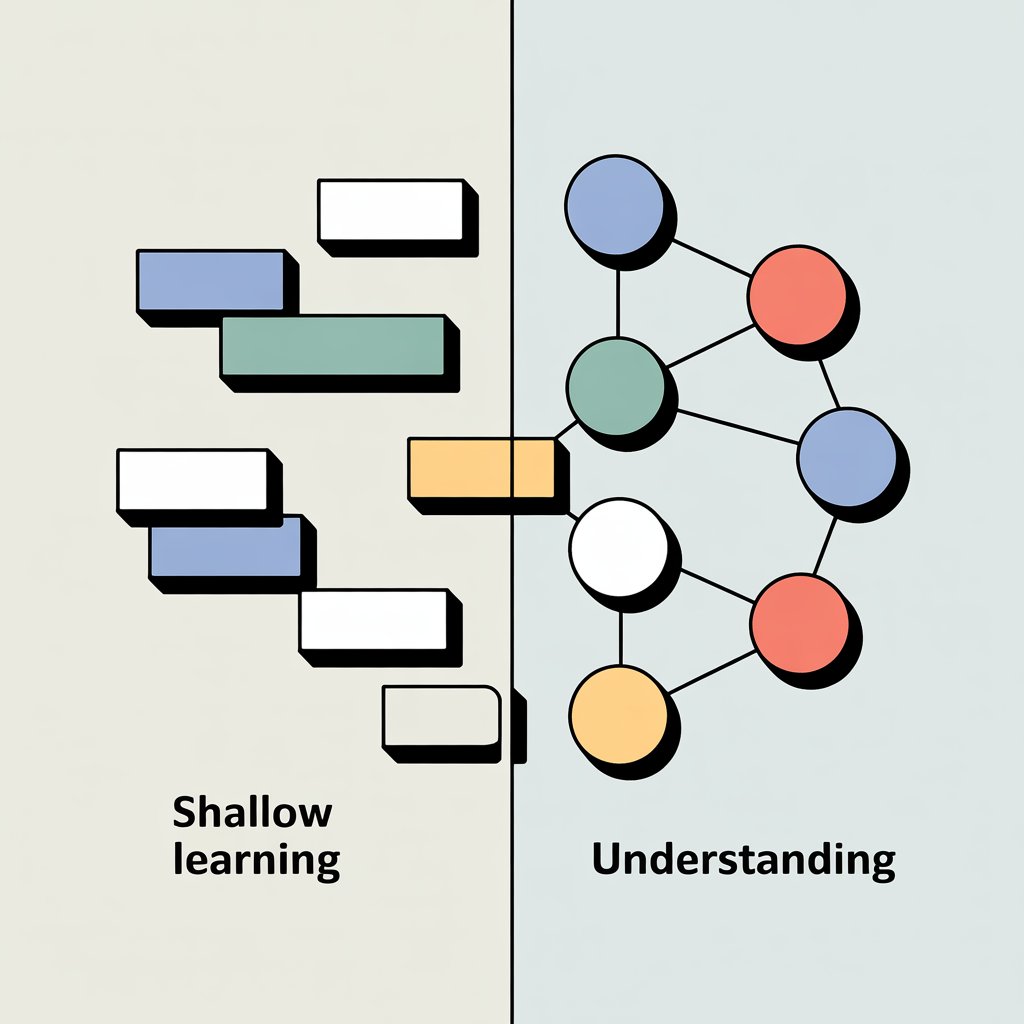
Understanding builds mental models. Students form an internal representation of how a concept works, see relationships between parts, and can explain it in different ways. This structure gives knowledge logical support and stability.
Memorized facts lack retrieval paths. Repetition stores information only in its original form. When recall fails, students cannot rebuild the idea because no connections exist.
The difference appears under pressure. Shallow learning depends on fragile memory that breaks under stress, time limits, or question changes. Understanding survives because students can reason through problems even when exact recall fails.
How to Fix Memorization Without Understanding
Fixing memorization requires changing how students engage with information. These methods replace surface repetition with active comprehension.
Replace repetition with explanation
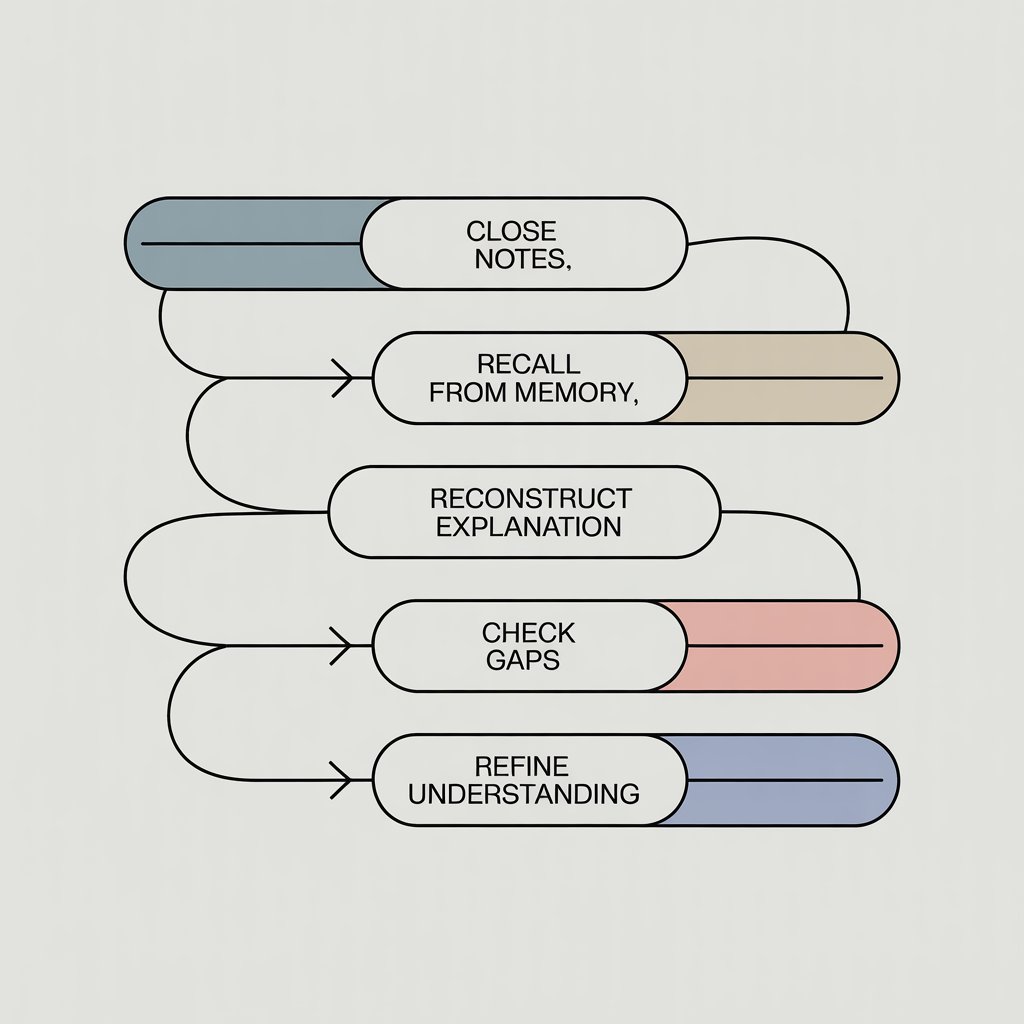
Studying should center on explanation, not repetition. Students must practice expressing concepts in their own words without looking at notes. If they cannot explain an idea clearly, they do not understand it.
Explanation tests comprehension because it forces structure. Describing a concept to someone unfamiliar with it exposes gaps immediately. Vague or circular explanations signal missing understanding. Clear explanations confirm that the idea has been mentally organized.
Explaining without notes removes the illusion of knowledge created by recognition. When students teach aloud or write explanations from memory, familiar wording is unavailable. What remains reflects actual understanding, not repeated exposure.
A more effective approach is outlined in how to remember what you study without re-reading, which focuses on recall and reconstruction instead of repetition.
Study cause-and-effect, not final answers
Understanding requires knowing why things happen, not just memorizing outcomes. Students should focus on the reasoning that produces answers.
Asking why and how reveals the logic behind facts. Instead of memorizing that mitosis has four stages, students should understand why cells divide in stages and what happens at each stage. Every fact should connect to a reason.
Tracing logic steps builds reasoning ability. Students should work through problems slowly, explaining each step. When exams present new problems, students can apply the reasoning process rather than search for memorized answers.
Use active recall with reconstruction
Active recall means retrieving information from memory without prompts. Reconstruction means building complete answers from scratch, not just recognizing correct options.
Writing answers from scratch tests real understanding. Students should close notes and write out everything they know about a topic. This reveals what they actually remember versus what they only recognize. The struggle to recall strengthens memory and exposes gaps.
Checking gaps after recall identifies what needs more study. After attempting reconstruction, students should compare answers to source material. Missing or incorrect details show where understanding is weak. This focuses study time on real gaps.
Connect new information to existing knowledge
Learning happens when new information integrates with what students already know. Isolated facts do not stick. Connected concepts form durable knowledge.
Linking ideas creates mental structure. Students should actively look for relationships between new concepts and previous learning. How does this relate to something they already understand? These connections turn separate facts into organized knowledge systems.
Testing understanding with examples confirms comprehension. Students should generate their own examples of concepts, not just remember examples from class. Creating examples requires understanding how concepts apply. This makes knowledge flexible and transferable.
Better Alternatives to Memorization-Based Study
Specific study methods replace memorization with understanding. These alternatives focus on building meaning and structure.
From rote memorization to concept mapping
Concept maps replace lists of facts with structured relationships. Students place concepts in boxes and connect them with labeled links.
This shifts focus from isolated items to how ideas fit together.
Building the map forces meaning-based decisions. Students must determine whether a relationship is causal, hierarchical, or conditional. These choices require understanding what each concept represents, not just recalling its name.
Structured relationships improve recall and problem-solving. A concept map creates multiple retrieval paths instead of a single memorized line. Students can reason through connections, reconstruct missing details, and apply knowledge when problems change.
From rereading to retrieval-based practice
Rereading creates familiarity, not learning. Seeing information again makes it feel known, but recognition does not improve recall. Retrieval practice works because it forces the brain to produce information instead of passively recognizing it.
Learning happens without prompts. Students should close their books and try to recall key ideas from memory. Writing short summaries without notes or answering questions unaided reveals whether understanding exists. This effortful recall builds stronger and more durable memory than passive review.
Retrieval also exposes weak understanding. Successful recall confirms learning. Failed recall reveals gaps immediately. This feedback directs study time to what needs work instead of repeating material that only feels familiar.
From copying notes to deliberate summarization
Copying notes reproduces information without processing it. Summarization forces students to understand and restate ideas in their own words.
Writing from memory reveals comprehension. Students should read a section, close it, and write a brief summary without looking. If they cannot do this, they do not understand the material. Converting content into original wording strengthens understanding.
Focusing on meaning rather than exact phrasing builds flexible knowledge. Students who summarize concepts as ideas, not sentences, can handle exam questions even when the wording changes.
What to Stop Doing and What to Do Instead
Changing study habits requires concrete replacements, not more effort.
Stop blind repetition. Rereading notes or textbooks without active engagement creates familiarity, not understanding.
Stop memorizing answers without explanation. Knowing the result without knowing why produces fragile learning that collapses under pressure.
Start explaining concepts aloud. Teach the topic in simple language without notes. If the explanation breaks, understanding is missing.
Start reconstruction practice. Close all materials and write everything you remember about the topic. Compare it with the source and focus only on the gaps.
The next step is narrow and immediate. Choose one memorized topic. Explain it aloud without notes. Write what you know from memory. Identify gaps. Study only those gaps. Test again. This replaces shallow memorization with structured understanding.