How to Review Study Material Without Cramming
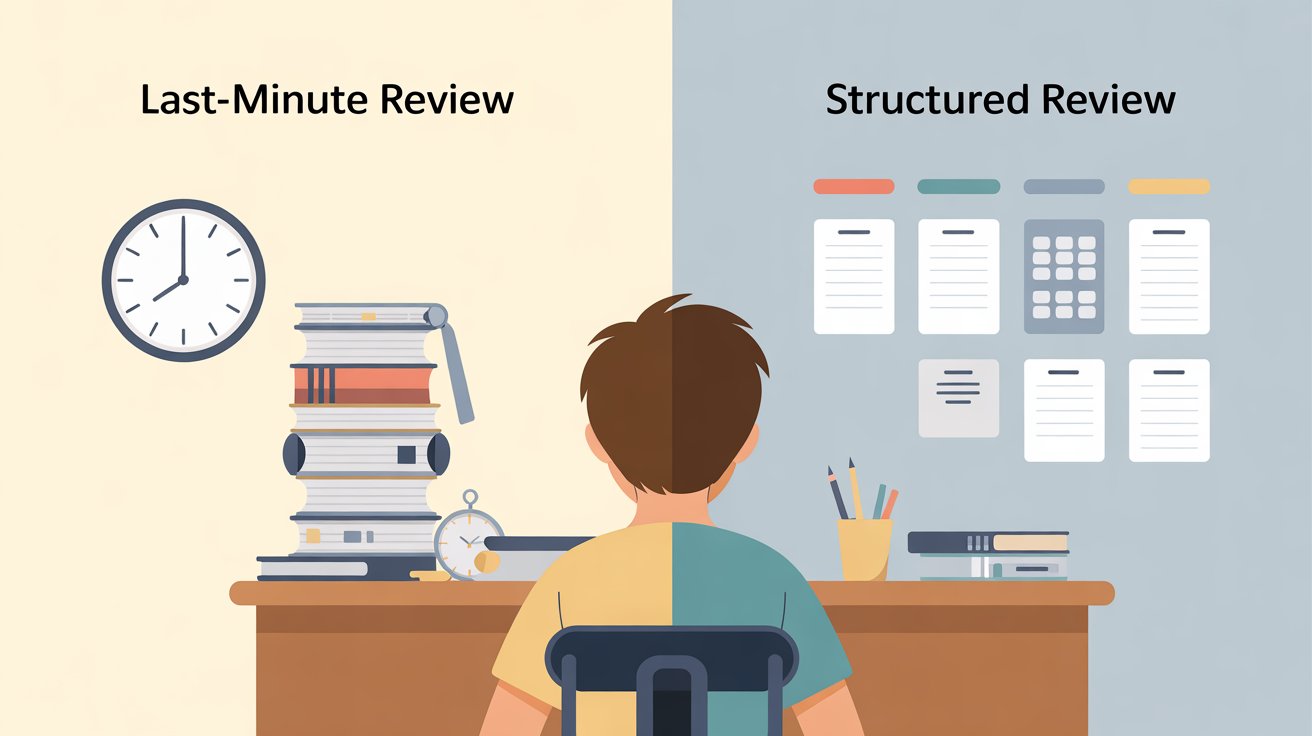
Illustration comparing last-minute cramming with structured study review over time.

Most students review content only when exams approach. This happens because daily review feels unnecessary when there is no immediate test. Delaying review also saves time in the short term, which makes it seem efficient. The problem appears during exams. Information reviewed at the last minute feels familiar during study but disappears under pressure. Students … Read more

Why Students Keep Making Study Mistakes Without Realizing It

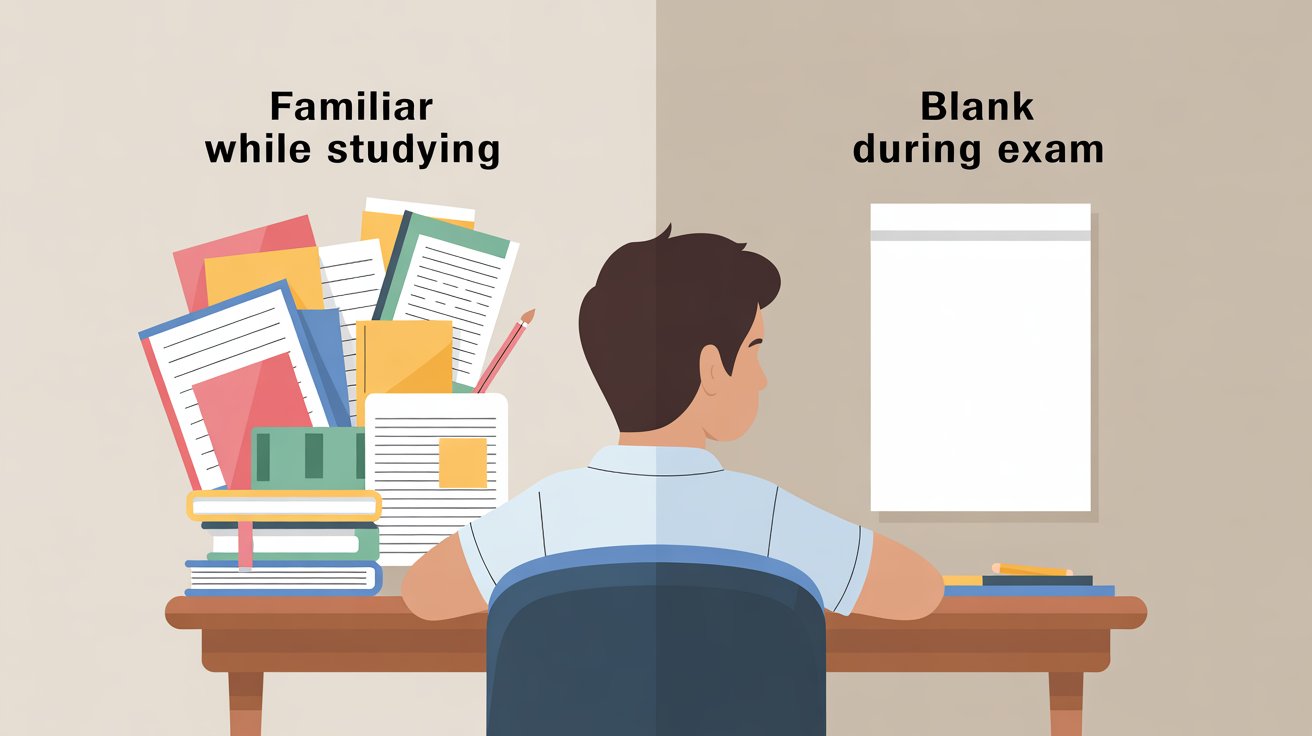
Student experiencing difficulty recalling familiar study material during an exam.

Most students spend hours studying using methods that feel productive. They highlight textbooks, rewrite notes, and review material multiple times. These activities create a sense of progress because they require time and effort. The problem is that effort does not equal learning. Many common study methods produce temporary familiarity without building actual understanding. Students finish … Read more

Why You Can’t Focus While Studying (And What Helps)

Student struggling to maintain focus while studying due to attention breakdown

Most students blame their focus problems on laziness, phones, or weak discipline. They believe that if they could just resist distractions, concentration would follow naturally. This leads to long study sessions where they sit with their books open but feel mentally absent. The material passes in front of their eyes, but nothing stays in their … Read more

Why Studying Faster Isn’t Studying Better

Illustration comparing fast studying with focused studying at a desk

Students try to study faster because they face time pressure, large syllabuses, and approaching exams. Productivity advice often suggests that faster coverage means better preparation. The assumption is simple: if you can finish more topics in less time, you will be ready for tests and perform better. The real issue is not about effort. Speed … Read more

A Simple Study Workflow That Improves Learning

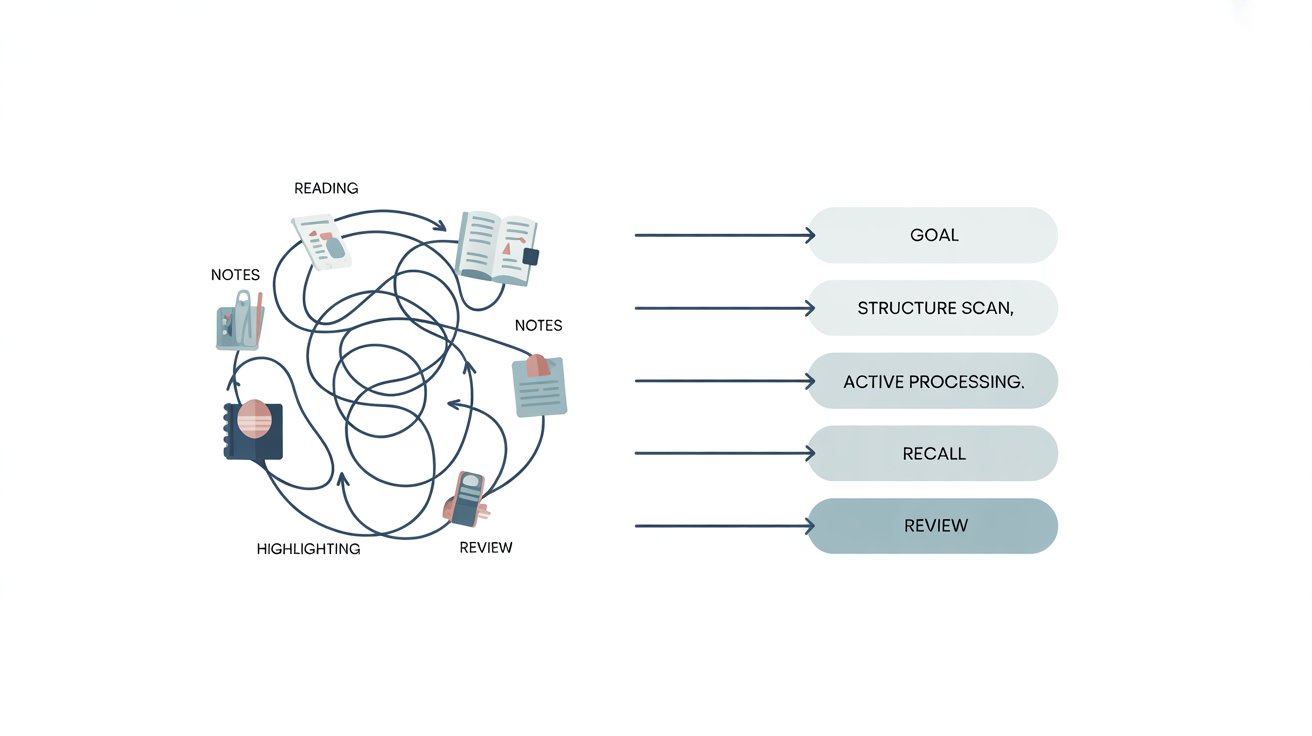
Comparison between random studying and a structured study workflow

Most students study without a clear process. They read chapters, highlight sentences, rewrite notes, and review materials when they feel uncertain. These actions happen in no particular order. Reading might come before note-taking one day and after it the next. Highlighting happens during reading or sometimes during review. The sequence changes based on mood, available … Read more

How to Remember What You Study Without Re-Reading

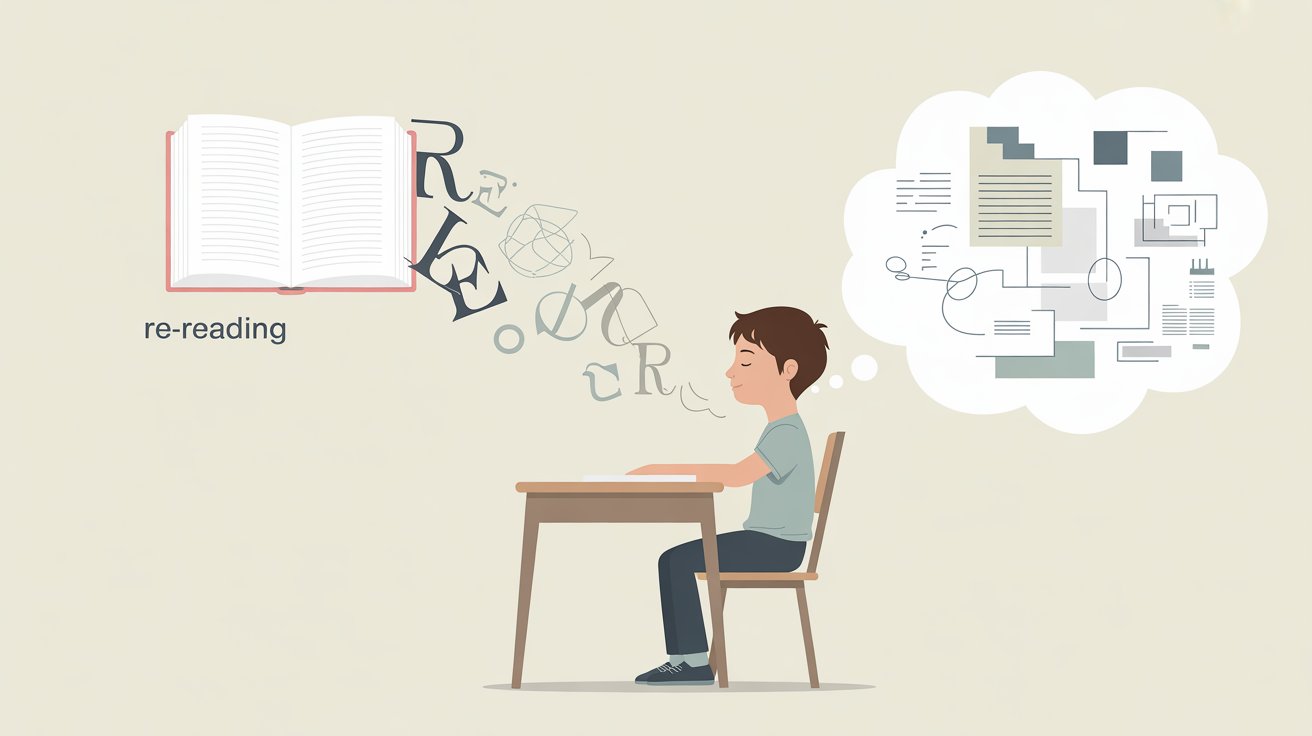
Illustration showing the difference between re-reading notes and recalling information from memory.

Most students re-read their notes and textbooks when studying. It feels productive because the material looks familiar after the second or third pass. The words make sense. The structure feels clear. Students assume this familiarity means they have learned the material. But familiarity is not the same as understanding. Recognition is not the same as … Read more

How to Summarize Notes Without Losing Meaning

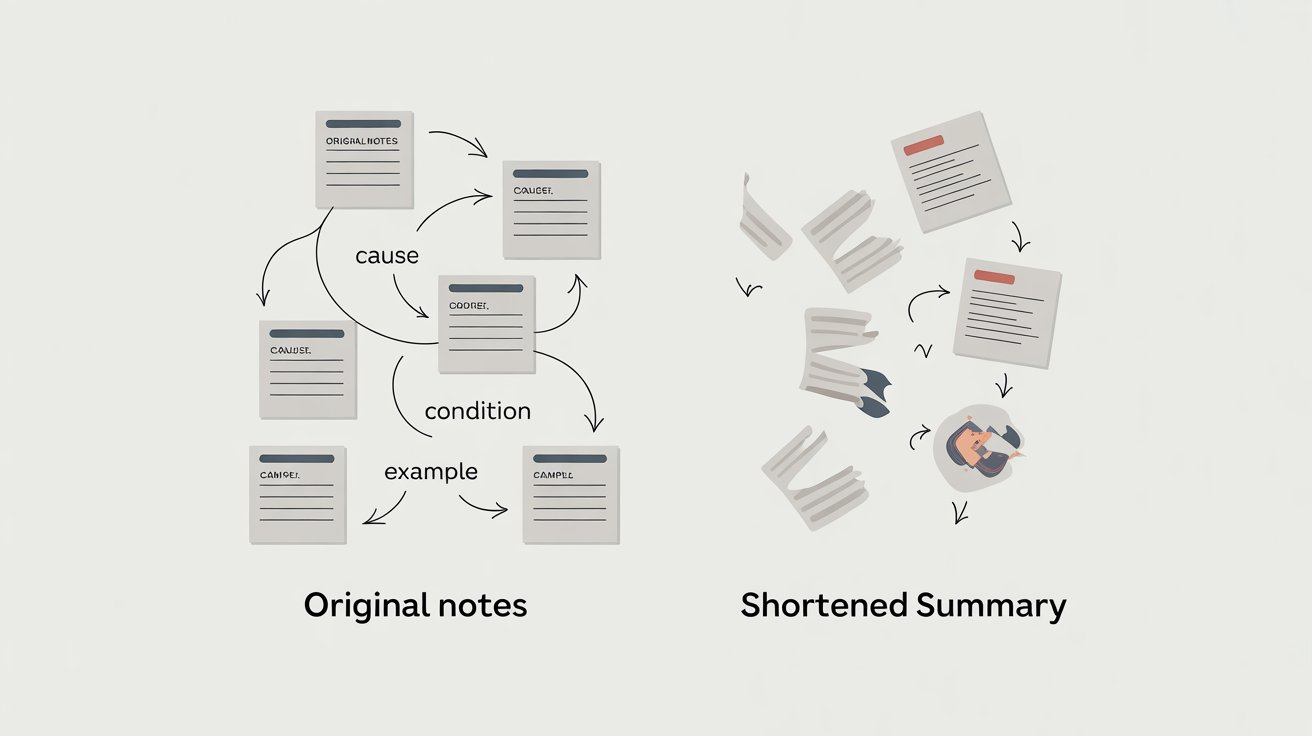
Comparison of original notes with labeled relationships versus shortened summaries with missing connections.

Students summarize notes because it feels productive. Shorter notes seem easier to review. The process creates the sense that material is being learned while being condensed. But most summarizing methods fail in a specific way. They make notes shorter without preserving what the notes actually mean. The result is a set of condensed notes that … Read more

Why Study Summaries Miss Key Points (And How to Fix Them)

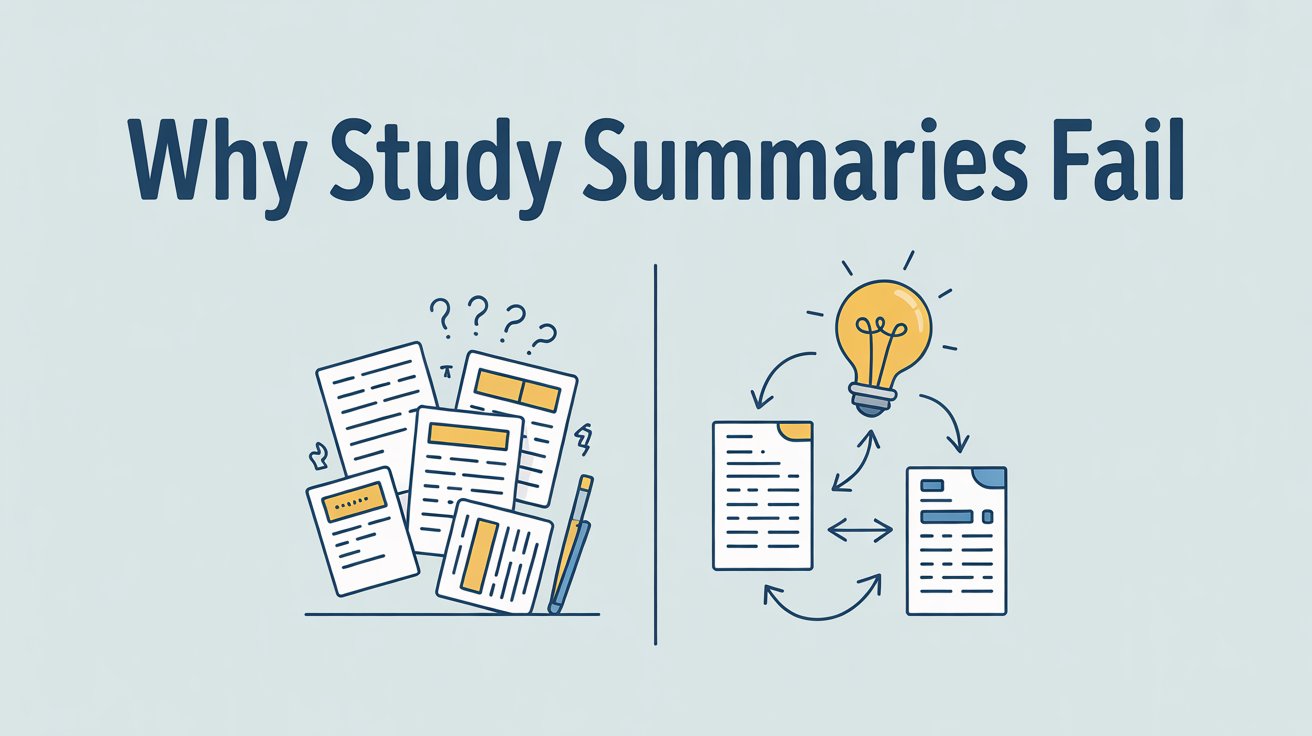
Why study summaries fail and how better study methods improve understanding

Many students create summaries to prepare for exams. They read textbooks, watch lectures, and write down key information in shorter form. This method feels productive and organized. However, most students later realize they cannot recall important details. They struggle during tests. They forget concepts they thought they understood. Understanding why this happens is crucial if … Read more