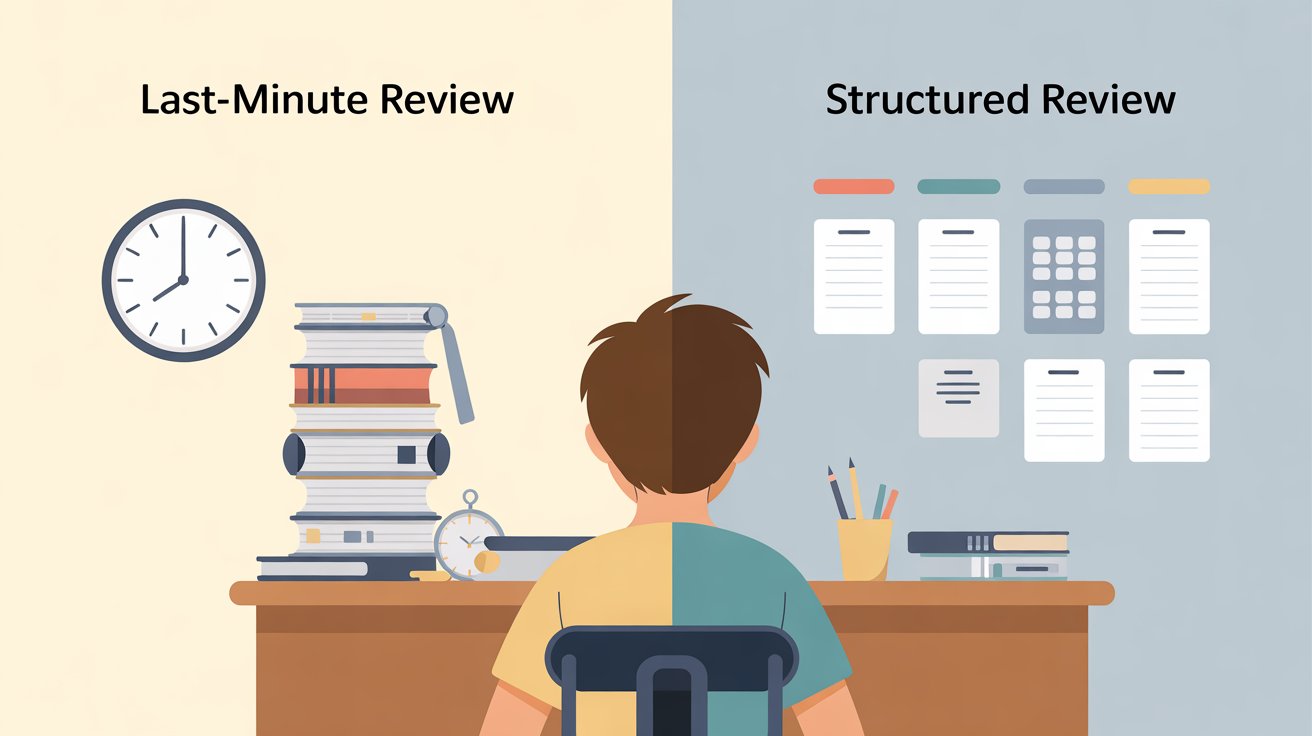
Most students review content only when exams approach. This happens because daily review feels unnecessary when there is no immediate test. Delaying review also saves time in the short term, which makes it seem efficient.
The problem appears during exams. Information reviewed at the last minute feels familiar during study but disappears under pressure. Students recognize words and concepts while reviewing but cannot recall or apply them during the test.
This happens because cramming compresses review into a narrow window. The brain does not have time to strengthen memory traces. Recall becomes weak and unstable.
The failure is not caused by poor memory or lack of focus. It is caused by the method. Review that happens only before exams is not review. It is re-learning under time pressure. The brain stores information temporarily because retrieval practice is absent. Memory pathways remain weak because spacing between review sessions does not exist.
This article explains why review becomes cramming, what breaks during cramming-based review, and how to review study material without cramming.
Why Reviewing Study Material Turns Into Cramming
Students treat review as repetition. They re-read notes, highlight sections, and rewrite summaries. This feels productive because the material becomes more familiar. But familiarity is not the same as recall.
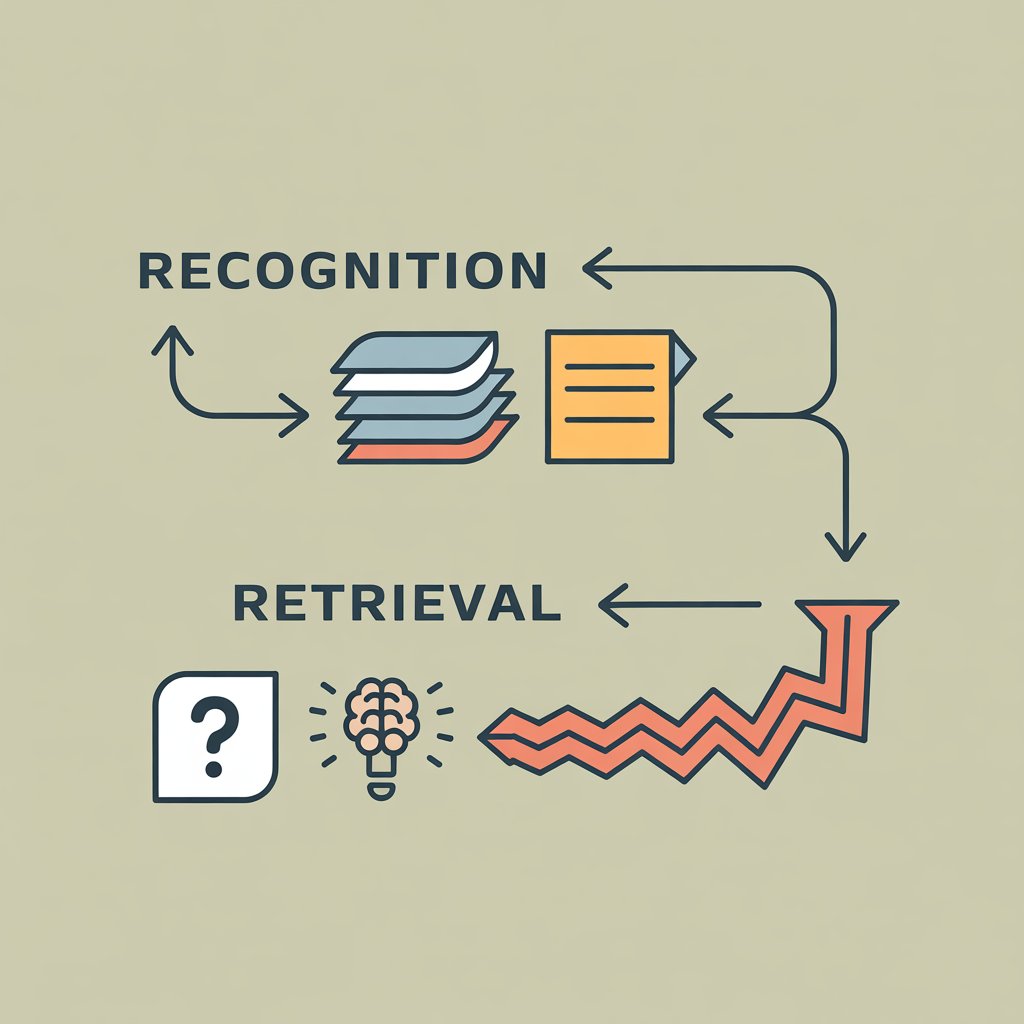
Familiarity measures recognition. Recall measures retrieval. The brain uses different pathways for each. Recognition happens when information is seen again. Retrieval happens when information is accessed without prompts. Exams test retrieval, not recognition. Review based on re-reading trains the wrong pathway.
This pattern is a form of passive learning, which is explained in more detail in why passive studying leads to poor retention.
Time pressure makes this worse. When exams are near, students compress weeks of content into a few days. Review sessions become longer and less frequent. The brain does not have time to process or store information properly. Memory consolidation requires spacing. Cramming removes spacing.
Review also becomes passive. Students scan notes without testing themselves. They recognize information instead of retrieving it. Recognition creates the illusion of learning. It does not prepare the brain for recall during exams.
This is why review turns into cramming. It is not caused by procrastination or time management failure. It is caused by a method that trains recognition instead of retrieval.
What Actually Breaks During Cramming-Based Review
Cramming creates weak memory traces. Memory strengthens through repeated retrieval over time. When review happens only before exams, the brain stores information temporarily. It prioritizes short-term access over long-term retention. The hippocampus encodes information but does not transfer it to long-term storage because repeated retrieval signals are absent.
Memory traces weaken further because spacing is removed. The brain needs time between retrieval attempts to consolidate information. When retrieval happens once in a compressed session, the memory pathway remains shallow. Shallow pathways decay quickly. Deep pathways formed through spaced retrieval remain stable.
This explains why students often experience recall failure during tests, as discussed in why you can’t recall information during exams.
Students also become dependent on familiar wording. They remember the structure of their notes, not the meaning of the content. This happens because recognition does not require flexible encoding. The brain stores information in the exact format it was reviewed. During exams, questions use different phrasing or require application. The brain cannot retrieve information because it was never stored in a flexible way.
Cramming also fails when questions are indirect or applied. Students can answer direct questions that match their notes. But when exams require reasoning, comparison, or explanation, memory breaks. The brain does not have enough retrieval practice to adapt the information to new contexts. Retrieval flexibility develops only through repeated, varied retrieval attempts. Cramming provides one retrieval attempt in one context. This does not prepare memory for different question formats.
Weak memory traces also fail under cognitive load. Exams introduce time pressure, multiple questions, and decision-making. These demands consume working memory capacity. When memory traces are shallow, retrieval requires more cognitive resources. Under exam conditions, shallow traces become inaccessible because working memory is overloaded.
The Real Cost of Reviewing Without a System
Students spend more hours studying but produce unstable results. Long review sessions feel productive but do not improve recall. Performance becomes inconsistent across exams. Some topics are remembered well. Others are forgotten completely. This inconsistency is not random. It reflects the lack of structured review.
Confidence also drops over time. Students lose trust in their study methods. They assume they need to study harder or longer. But effort without structure does not solve the problem.
The real cost is not time. It is the repeated failure of a method that feels like it should work. Students continue using cramming because they do not have a better alternative.
How to Review Study Material Without Cramming
Effective review separates learning from checking. It uses short, repeated sessions instead of long, infrequent ones. It tests recall instead of re-reading notes. It identifies weak points and adjusts focus.
Separate learning from review
Learning happens when new content is understood and organized. Review happens when memory is tested. These are different processes. Mixing them weakens both.
During review, the goal is to check what the brain can retrieve without prompts. If retrieval fails, the content needs more learning, not more review. Re-learning during review sessions wastes time. It creates familiarity without strengthening memory.
Re-learning during review also prevents accurate diagnosis. When students re-read content after failed retrieval, they cannot identify whether the failure was caused by weak encoding, weak storage, or weak retrieval pathways. The brain receives new input instead of testing existing memory. This resets the process instead of strengthening it.
Students should complete learning before starting review. This means understanding concepts, organizing notes, and summarizing information. Once learning is done, review becomes a diagnostic process. It tests memory and reveals gaps.
The separation also changes how retrieval is practiced. When learning is complete, retrieval happens without reference material. The brain accesses stored information instead of processing new input. This forces the retrieval pathway to activate. Activation strengthens the pathway. Repeated activation over time makes retrieval automatic.
Use short, repeated review sessions
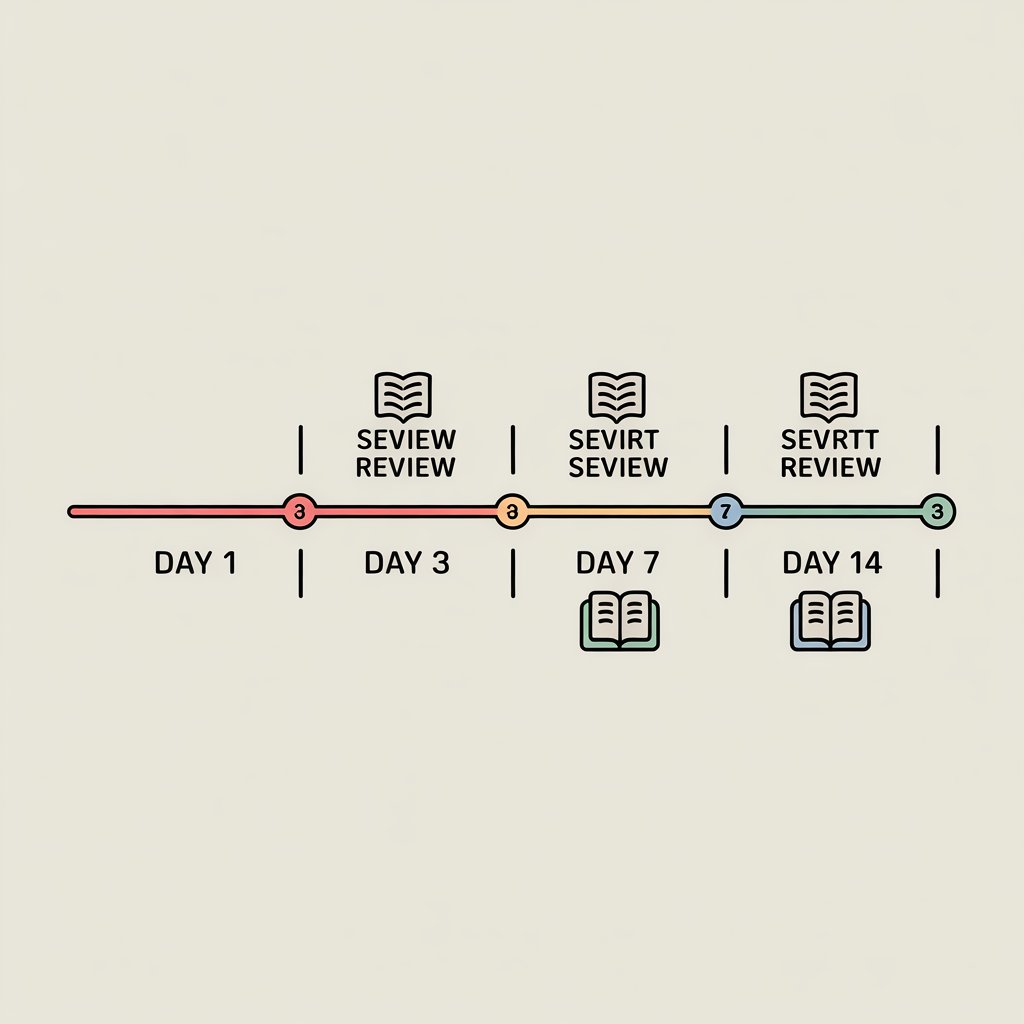
Spaced review means reviewing content multiple times over increasing intervals. The first review happens soon after learning. The second review happens a few days later. The third review happens a week later. Each review strengthens memory without requiring long sessions.
Short sessions work better than long ones because the brain retains information more effectively when retrieval is repeated over time. A 15-minute review session every few days produces stronger memory than a 2-hour session the day before an exam.
Spacing also prevents overconfidence. When students review immediately after learning, everything feels easy. This creates the illusion of mastery. Spacing introduces difficulty. Difficulty forces the brain to work harder during retrieval, which strengthens memory.
Review by questions, not notes
Recall strengthens memory more than recognition. Students should turn their notes into questions or prompts. Instead of re-reading a definition, they should ask themselves to explain the concept without looking. Instead of scanning a list of steps, they should write the steps from memory.
This method is harder than re-reading. That is why it works. The brain strengthens pathways when it retrieves information actively. Passive review creates familiarity. Active review creates recall.
Students can use flashcards, blank sheets, or simple question lists. The format does not matter. What matters is that review forces retrieval without access to notes.
This recall-based approach is the foundation of how to remember what you study without re-reading.
Track what fails during review
Not all topics require equal review. Some concepts are recalled easily. Others fail repeatedly. Students should track which topics or questions they struggle with during review.
This allows focused review. Instead of reviewing everything equally, students can spend more time on weak areas. This makes review more efficient. It also prevents wasted effort on content that is already stable.
Tracking does not require complex systems. A simple list of failed questions or weak topics is enough. The goal is to adjust review focus based on performance.
What to Replace Cramming With
Students need alternatives that are practical and usable. Comparing methods clearly helps students understand why some approaches fail and others work.
Re-reading vs spaced review
Re-reading feels productive because it is easy. The material becomes more familiar with each pass. But familiarity is not memory. Re-reading does not force retrieval. It does not test whether the brain can access information without prompts.
Spaced review works because it introduces retrieval practice. Each review session tests memory. When retrieval succeeds, memory strengthens. When retrieval fails, the brain identifies gaps. This creates a feedback loop that improves retention over time.
Full syllabus review vs targeted review
Reviewing the entire syllabus before exams wastes time. Some topics are already stable. Others need repeated practice. Treating all content equally spreads effort too thin.
Targeted review focuses on weak areas. Students review topics they struggle with more frequently. Topics that are recalled easily are reviewed less often. This makes review more efficient. It also improves recall where it matters most.
How to Build a Simple Review Schedule
A review schedule does not need to be complex. It needs to separate review from cramming and create regular retrieval practice.
Weekly review blocks
Students should link review to completed topics. After finishing a topic, schedule a short review session within 2–3 days. Schedule a second review session 1 week later. Schedule a third review session 2 weeks later.
Each session should last 15–30 minutes. The goal is to test recall, not re-learn content. If recall fails, mark the topic for additional review.
Pre-exam review adjustment
As exams approach, increase review frequency without extending session length. Instead of reviewing once a week, review every 2–3 days. This maintains memory strength without creating the pressure of cramming.
Pre-exam review should focus on weak topics identified during earlier sessions. Strong topics need minimal review. This keeps the schedule manageable.
What to Stop Doing and What to Start Doing
Stop reviewing only before exams. Stop re-reading full notes as a review method. Stop treating familiarity as evidence of memory.
Start using spaced review immediately after learning topics. Start testing recall with questions or prompts. Start tracking weak areas and adjusting review focus.
The first step is to schedule one short review session for a recently completed topic. Test recall without looking at notes. This single session will show whether the method works better than cramming.