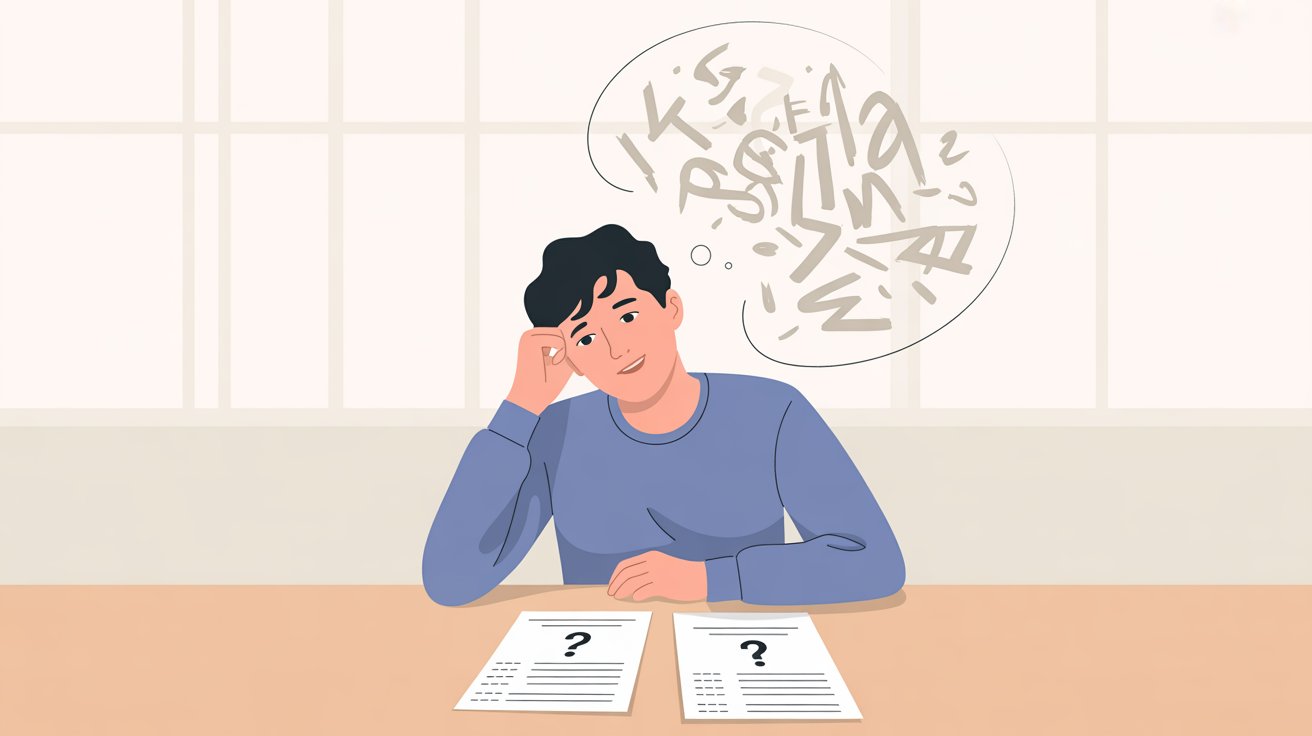
Most students study by reading notes, highlighting textbooks, and reviewing material multiple times before exams. These methods feel productive and create a sense of preparation. The content feels familiar. Understanding seems solid.
Then the exam begins, and recall fails.
Information that felt accessible during study becomes unreachable during the test. Answers feel partially formed but incomplete. Concepts that seemed clear now produce blank spaces on the page.
This is not a memory problem. It is not an intelligence failure. It is a predictable result of how most students prepare for exams.
This article explains why exam recall problems happen, what causes the gap between study confidence and test performance, and how to rebuild study methods that produce reliable recall under exam conditions. The focus is on practical causes and usable fixes, not motivation or theory.
The Core Recall Problem Students Face in Exams
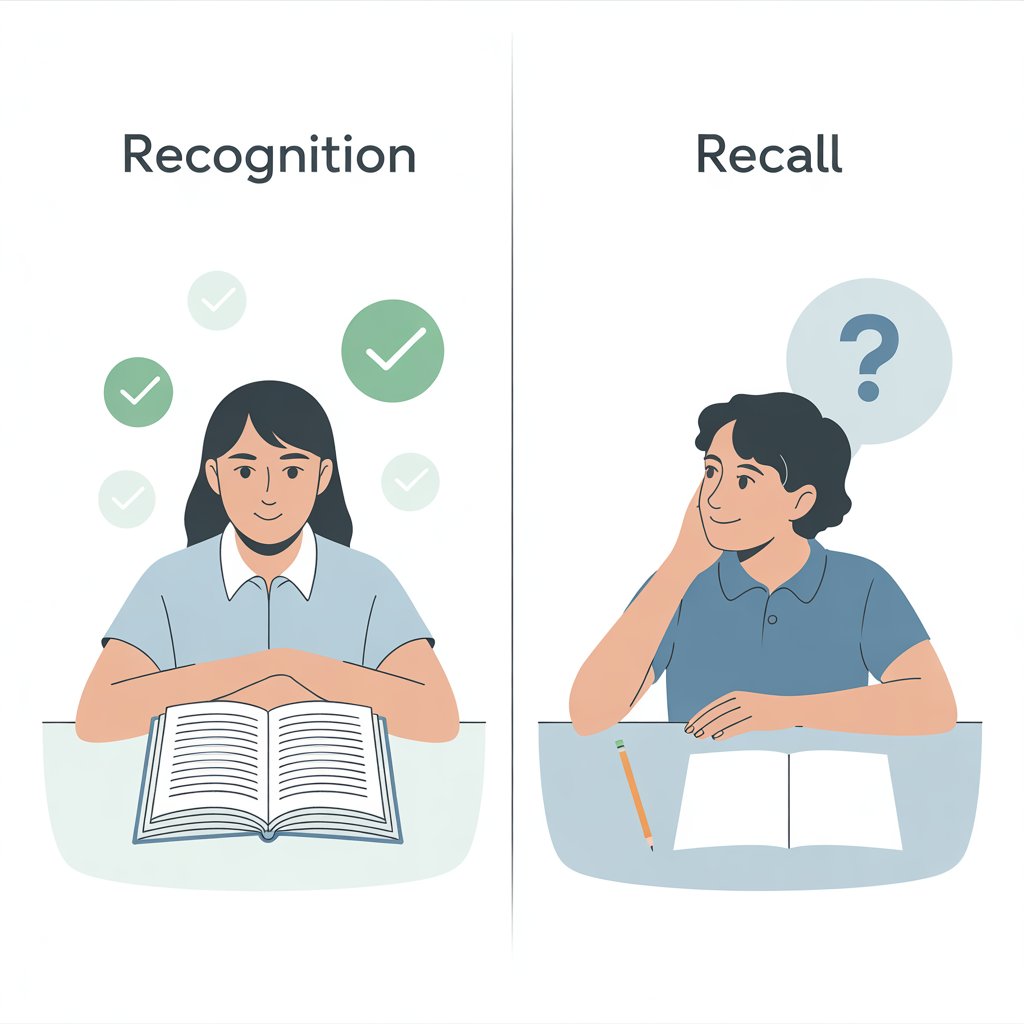
The central issue is the difference between recognition and recall.
Recognition happens when you see information and understand it. You read your notes and the content makes sense. You review a chapter and follow the logic. You look at a practice problem and recognize the solution method.
Recall happens when you retrieve information without support. No notes. No textbook. No examples in front of you. Just the requirement to produce the answer from memory.
Most students confuse recognition for recall. They study using methods that build recognition strength, then expect recall to work automatically during exams.
It does not.
During exams, students experience partial recall. They remember fragments but cannot reconstruct complete answers. They recognize questions but cannot produce solutions. They feel the information is “somewhere in their head” but cannot access it under pressure.
This is a learning failure, not an intelligence failure. The study methods used before the exam did not build the specific skill exams require: unaided retrieval. Recognizing information when you see it is easier than recalling it when you do not. Exams demand recall. Most study methods only train recognition.
This problem is closely related to why study notes feel useful but fail in exams, even when they look complete and make sense during review.
Why Students Forget Information During Exams
This section explains the underlying causes behind exam recall problems and how study behavior creates recall failure.
Studying That Builds Familiarity Instead of Retrieval
Most students rely on passive review methods. They reread notes. They highlight textbooks. They watch the same lecture slides multiple times. They look at solved problems and follow the steps.
These methods create familiarity. After reviewing material several times, it feels known. The content looks clear. Understanding feels solid.
Familiarity is not recall ability.
When you study by reviewing, you practice recognizing information that is already visible. You do not practice retrieving information that is hidden. Your brain learns to understand content when it appears, not to produce content when it does not.
During exams, no notes appear. No textbook is open. No solved examples are visible. The exam requires retrieval, but your study trained recognition. The pathway you practiced (seeing → understanding) is not the pathway the exam uses (question → recall → answer).
This mismatch is why information feels accessible during study but unreachable during exams. This false confidence comes from confusing familiarity with real understanding, a mistake explained in detail in why students confuse familiarity with understanding.
Lack of Retrieval Practice Before the Exam
Exposure to information does not build retrieval strength. Reading Chapter 5 three times does not train your brain to recall Chapter 5 without support.
Retrieval practice means attempting to produce information from memory before checking if you are correct. You close your notes and write what you remember. You attempt practice problems without looking at examples. You explain concepts aloud without reference material.
Most students skip this step. They review material until it feels familiar, then assume recall will work during the exam. It does not.
Without retrieval practice, memory pathways remain weak. Your brain has not practiced pulling information out of storage. It has only practiced recognizing information when it appears.
Under exam pressure, weak retrieval pathways collapse. The information exists in memory but cannot be accessed reliably. Partial recall produces incomplete answers. Blank spaces appear where full explanations should be.
Context Mismatch Between Study and Exam Conditions
Memory is state-dependent and context-dependent. The conditions under which you encode information affect how easily you retrieve it later.
Most students study with notes open, textbooks nearby, and no time pressure. They review material in short sessions with breaks. They check answers immediately when uncertain.
Exams operate under different conditions. No notes. No references. Strict time limits. No ability to check correctness until after submission.
When study conditions and exam conditions differ significantly, retrieval becomes harder. Your brain encoded information in one context (relaxed, supported, unpressured) but must retrieve it in another context (tense, unsupported, time-limited).
This is why students perform well during open-book practice but poorly during closed-book exams. The retrieval cues available during study (visible formulas, nearby examples, accessible definitions) are absent during exams. Without those cues, recall fails.
The solution is not to recreate exam stress during every study session. The solution is to practice retrieval under conditions that match exam requirements: no support, timed attempts, and delayed feedback.
How Test Anxiety Interferes With Learning and Recall
Test anxiety disrupts retrieval by consuming working memory resources and triggering stress responses that interfere with memory access.
When anxiety is high, the brain prioritizes threat detection over information retrieval. Attention narrows. Working memory capacity decreases. Recall pathways become harder to activate.
However, anxiety does not create recall problems. It magnifies existing weaknesses.
Students with strong retrieval pathways experience less anxiety because recall feels reliable. Students with weak retrieval pathways experience more anxiety because recall feels uncertain.
Anxiety management strategies (breathing exercises, positive thinking, relaxation techniques) can reduce symptoms but do not fix weak memory. If retrieval pathways are poorly developed, calming techniques alone will not produce correct answers.
Test anxiety learning issues are usually secondary problems. The primary issue is insufficient retrieval practice before the exam. Anxiety makes weak recall worse, but building stronger recall reduces both the memory problem and the anxiety that follows.
What Happens When Recall Fails During Exams
This section describes the specific consequences students experience when retrieval pathways fail under exam conditions.
When recall fails during exams, several consequences follow.
Incomplete answers appear. Students write partial explanations because they cannot retrieve full concepts. They list some factors but miss others. They start solving a problem but cannot complete the steps.
Poor structure appears despite understanding. Students know the topic generally but cannot organize their knowledge into coherent answers. They write scattered points instead of logical sequences. They produce fragments instead of full arguments.
Scores drop unrelated to effort. Students who studied extensively still perform poorly because their study methods did not build exam-relevant skills. Hours spent reviewing did not translate into retrieval strength.
Ineffective study methods get reinforced. Students conclude they did not study enough, so they study more using the same methods.
They reread more notes. They highlight more textbooks. They review more often. Recall does not improve because the study approach remains unchanged.
This cycle continues until students recognize that the problem is not effort quantity. The problem is method quality.
How to Fix Exam Recall Problems
Here are clear actions students can use to improve their ability to recall information.
Replace Review-Based Study With Active Recall
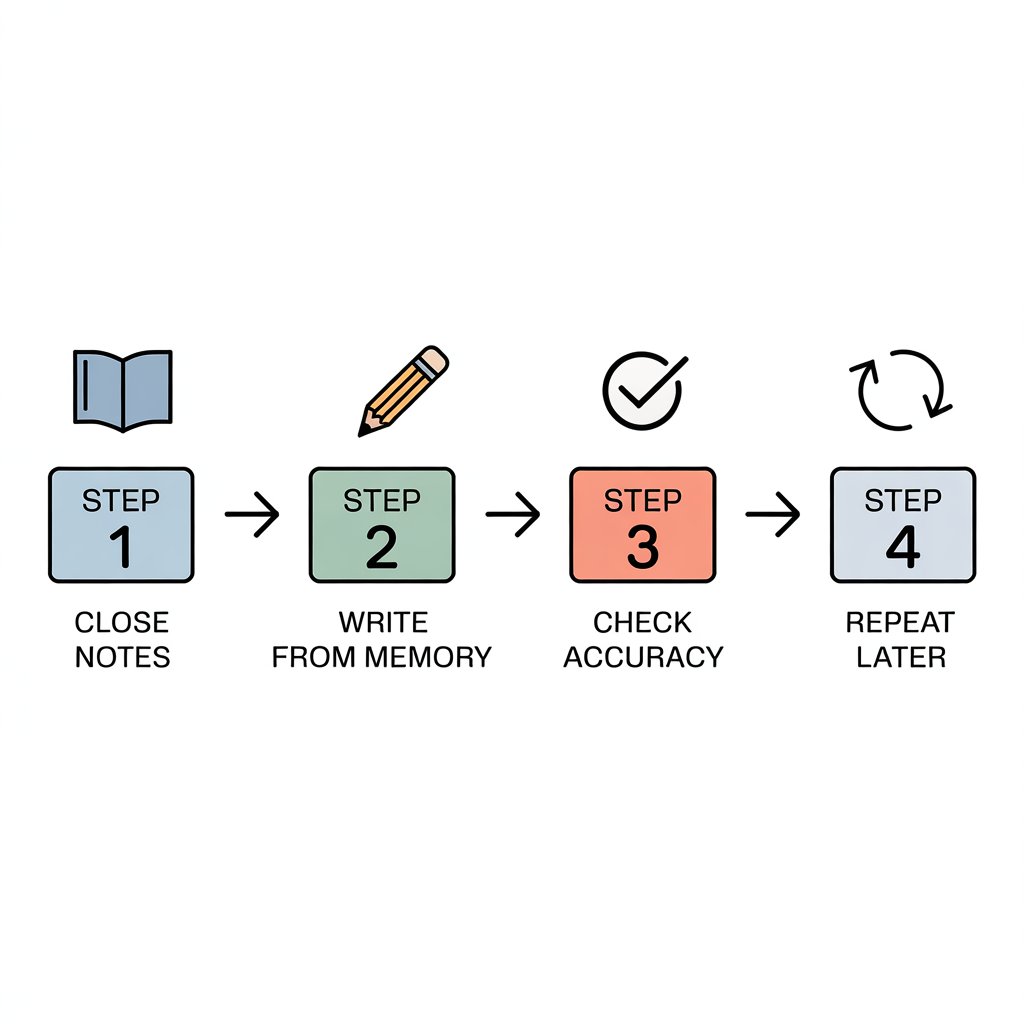
Active recall means attempting to retrieve information from memory without looking at notes or references first.
Close your textbook and write everything you remember about the topic. Explain the concept aloud without checking your notes. Solve the problem without looking at examples. After attempting recall, check your accuracy. Identify what you retrieved correctly and what you missed. Study the gaps, then attempt recall again later.
Start each study session with a retrieval attempt before reviewing any material. If rereading is the habit causing recall failure, the solution is retrieval-based study, which is outlined step by step in how to remember what you study without re-reading.
Use Retrieval Practice as a Daily Study Method
After reading a chapter, close the book and write a summary from memory. After attending a lecture, explain the main points without looking at slides. After learning a new method, solve problems without reference material.
Check your answers after each retrieval attempt. Correct errors immediately. Identify weak areas and target them in the next retrieval session.
Repeat retrieval attempts for the same material across multiple days.
Practice Under Exam-Like Conditions
Set a timer. Remove all notes and reference materials. Attempt practice problems or essay questions without support. Do not check answers until the timed session ends.
Practice full-length exams under realistic time limits at least twice before the actual exam.
Schedule these practice sessions at the same time of day as your scheduled exam when possible.
Separate Anxiety Management From Memory Building
Calming strategies can reduce physical symptoms of test anxiety, but they do not fix weak recall.
If your recall pathways are poorly developed, breathing exercises will not produce correct answers. Positive affirmations will not retrieve formulas. Relaxation techniques will not reconstruct arguments.
Build recall strength first through retrieval practice. Strong recall reduces uncertainty, which reduces anxiety naturally.
Use calming strategies as supplementary tools, not primary solutions. Address the memory problem directly by changing how you study.
What to Stop Doing vs What to Do Instead
These ineffective study methods are directly replaced with better ones instead of being left unstated.
Stop Rereading and Highlighting
Rereading notes and highlighting textbooks create familiarity without building retrieval strength.
These methods feel productive because they are easy and create visible progress. Highlighted pages look studied. Reviewed notes feel known.
But during exams, familiarity does not produce answers. You cannot highlight your way to recall. You cannot reread your way to retrieval ability.
These methods fail because they train recognition, not recall. They prepare you to understand information when you see it, not to produce information when you do not.
Start Practicing Recall Without Support
Replace rereading with active recall. Replace highlighting with self-testing.
When you sit down to study, your first action should be attempting to retrieve information without looking at notes. Write what you remember. Solve problems without examples. Explain concepts without references.
Only after attempting recall should you check accuracy and review gaps.
This approach feels harder initially because it exposes weaknesses immediately. That difficulty is the point. Retrieval practice works because it is challenging. Easy review methods feel comfortable but do not build exam-relevant skills.
Clear Next Steps for Students
Stop reviewing notes passively before exams. Stop highlighting textbooks and rereading chapters repeatedly.
Start practicing retrieval daily. Put your notes aside and write down everything you can recall from memory. Test yourself on material without support. Simulate exam conditions during practice sessions.
For your next study session, pick one topic from your most recent class. Close all materials. Write everything you can recall about that topic. Check accuracy afterward and identify gaps.