
Most beginners rely on tutorials, guides, and instructional videos when learning a new skill. These methods feel productive because they deliver clear explanations and organized information. Progress seems visible while watching or reading.
This approach fails because it creates familiarity without ability. Beginners confuse exposure to information with actual learning. They spend hours consuming content but struggle when asked to perform the skill independently. Memory fades quickly. Application feels difficult or impossible.
The pattern repeats across skills. A programming beginner watches ten tutorial videos but cannot write basic code without reference. A language learner reads grammar explanations but freezes during conversation. A student reviews lecture notes repeatedly but performs poorly on exams.
The breakdown is consistent. Effort increases, but usable skill does not. Beginners cannot identify what went wrong because the learning process felt thorough. The real problem is not effort or intelligence. It is method failure that wastes time and creates beginner learning problems.
The Core Learning Failure Beginners Face
Beginners treat exposure as learning. They watch demonstrations, read explanations, and review materials. These activities feel like progress because new information enters their awareness. Recognition improves. Concepts seem clearer.
But recognition is not retrieval. Understanding an explanation is not the same as generating the answer independently. Beginners mistake passive familiarity for active knowledge. This is the same mechanism explained in why passive studying leads to poor retention, where recognition replaces real learning. This creates slow skill acquisition even when study time is high.
The failure appears during application. When beginners attempt to use the skill without guidance, they realize they cannot execute independently. Steps are forgotten. Connections are unclear. What seemed understood during study becomes inaccessible during performance.
Time spent does not equal skill gained. Hours of input-focused study produce weak, unreliable ability. Beginners interpret this as personal failure when the actual cause is structural. The learning method itself prevents skill formation.
Why This Failure Happens in Beginners
Three mechanisms drive beginner learning problems. Each one reinforces the others and makes independent skill performance difficult. This confusion is explained in why students confuse familiarity with understanding.
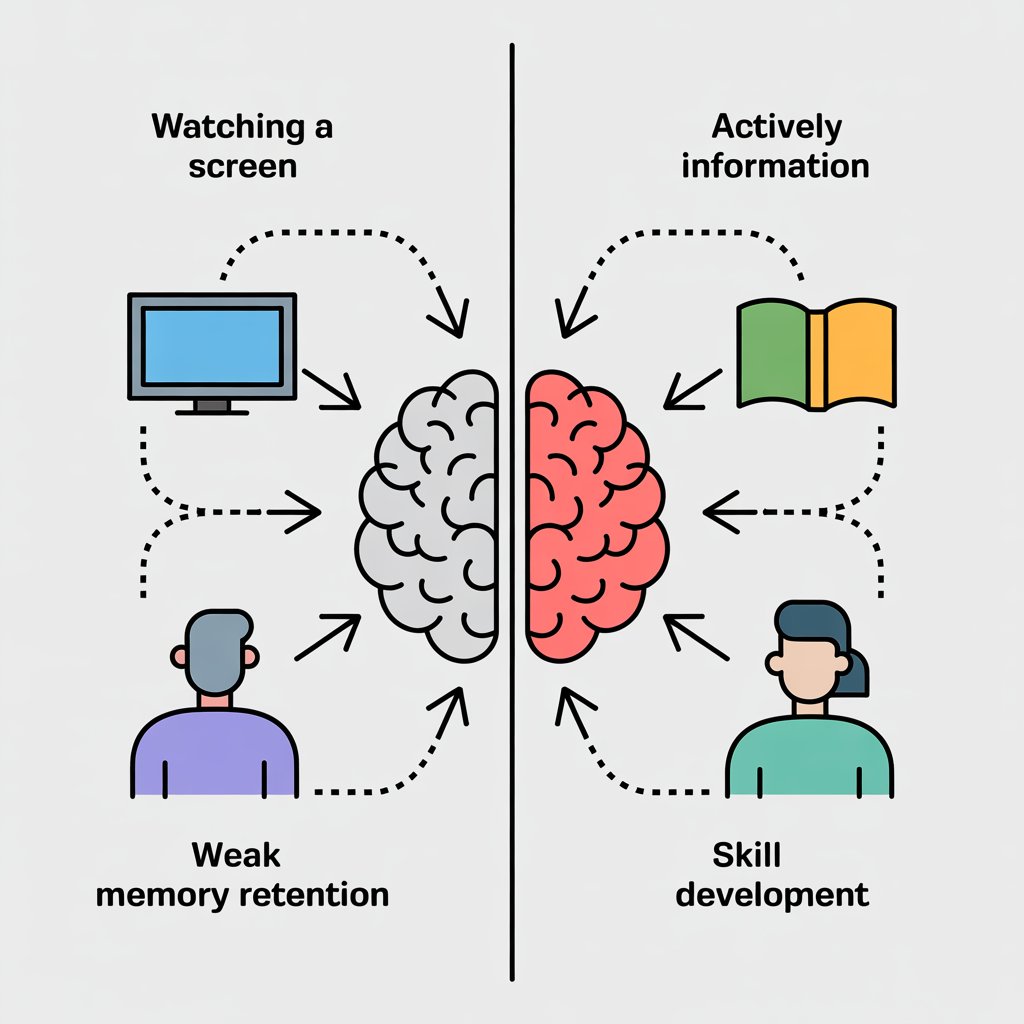
Passive input replaces active practice
Beginners allocate most learning time to reading and watching. These activities require minimal mental effort and provide continuous new information. Passive input feels efficient because coverage is fast.
The brain does not store information effectively through passive exposure. Memory formation requires retrieval. Watching someone solve a problem does not build the pathways needed to solve it independently. Reading an explanation does not create recall strength.
Beginners who spend hours on tutorials and guides build recognition but not execution ability. When performance is required, the skill is absent. This is why slow skill acquisition persists even with high study volume.
Too many concepts are introduced at once
Beginners lack filtering ability. They cannot distinguish essential information from supplementary details. Tutorials and courses present topics in sequence, and beginners attempt to absorb everything equally.
This creates cognitive overload. The brain cannot process and consolidate large volumes of new information simultaneously. Connections between concepts remain weak. Understanding becomes shallow and fragmented.
Overload prevents stable skill formation. Beginners move to new material before earlier concepts are secure. Each new layer adds confusion instead of depth. Retention drops and application becomes unreliable.
Feedback arrives too late or not at all
Beginners practice without knowing if their execution is correct. They complete exercises, write code, or attempt problems, then continue without verification. Errors are not identified or corrected.
Incorrect execution becomes reinforced through repetition. The brain treats repeated actions as learning, even when those actions are wrong. Beginners build flawed habits that are difficult to reverse later.
Without immediate feedback, progress feels random. Beginners cannot distinguish between correct and incorrect execution.
Confidence stays low because performance outcomes are unpredictable. Learning becomes inefficient and frustrating.
What Happens If Beginners Continue This Way
Continued reliance on passive methods produces predictable outcomes. Exam performance stays poor despite review time. Beginners cannot recall key information under test conditions. Material that seemed clear during study becomes inaccessible during evaluation.
Independent application remains weak. Beginners need constant reference to guides, examples, or templates. They cannot perform tasks from memory or adapt learned skills to new situations. Every variation requires external support.
The gap between effort and results grows. Beginners increase study hours but see minimal improvement. Frustration builds. Motivation declines. Many conclude they lack natural ability when the real issue is method failure.
Long-term consequences include incomplete skill development and wasted time. Beginners who spend months on ineffective methods could have built strong skills in weeks with better approaches. The cost is measured in lost progress and unrealized capability.
How Beginners Can Fix the Learning Breakdown
Four behavioral changes directly address the causes of beginner learning problems. Each change replaces a failing method with a practice that builds usable skill.
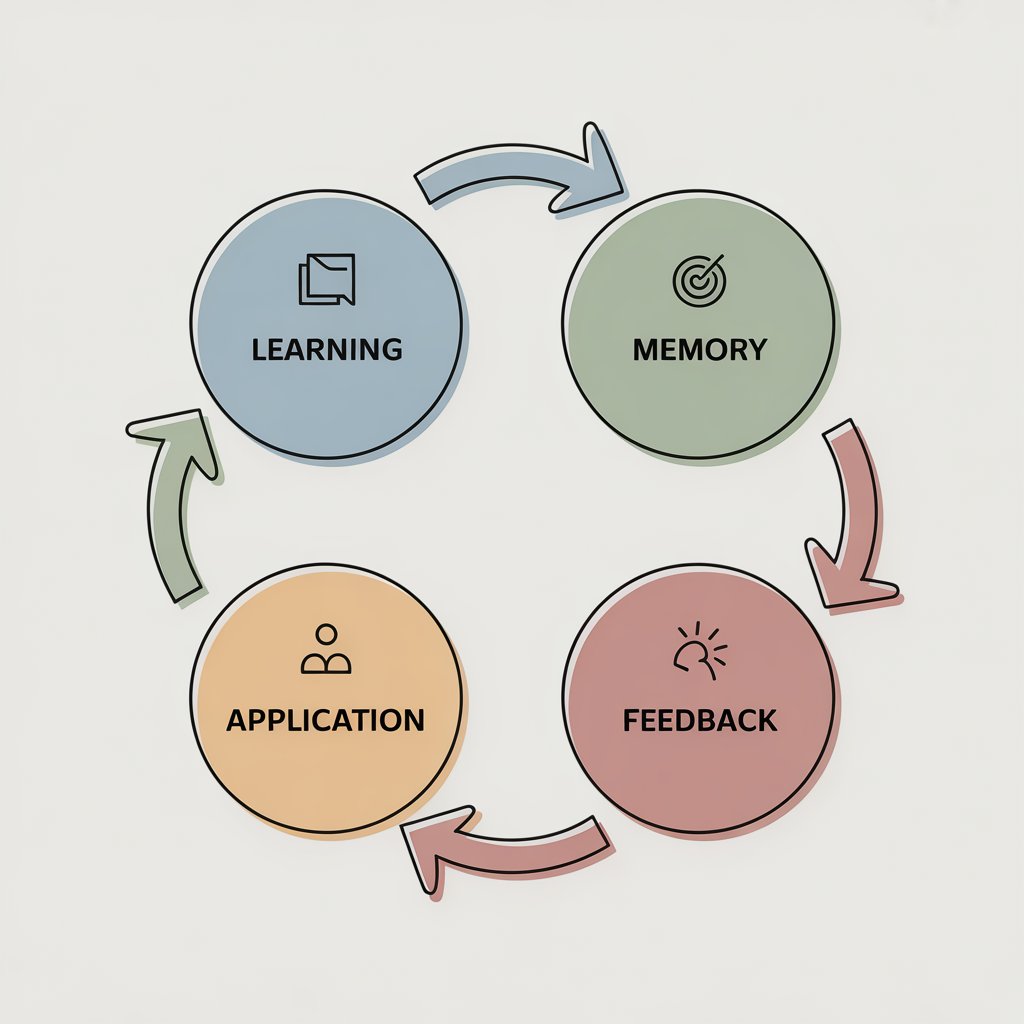
Replace watching with forced recall
Beginners should limit passive input to short cycles. Watch or read one small section, then close the material immediately. Attempt to recall the content from memory without looking back.
This forces the brain to retrieve information rather than recognize it. Retrieval strengthens memory pathways and exposes gaps in understanding. When recall fails, beginners know exactly what needs review.
The process should be uncomfortable. Difficulty during recall indicates the brain is working to build strong memory. Beginners who cannot recall without looking have not yet learned the material. Repeated retrieval cycles convert weak familiarity into stable knowledge.
Limit learning scope to one usable unit
Beginners should define the smallest action they can execute independently. For programming, this might be writing a single function. For language learning, forming one correct sentence. For math, solving one problem type.
Ignore advanced material until the basic unit is stable. Expansion only works when the foundation is secure. Beginners who jump between topics before mastering basics create shallow understanding across everything.
Execute the unit repeatedly without reference. Adjust based on feedback. Add complexity only after independent execution is consistent. This approach builds depth before breadth and prevents cognitive overload.
Build immediate feedback into practice
Check every practice attempt against a clear standard. For writing code, run the program and verify output. For solving problems, compare the solution to the correct method. For language practice, use a native speaker or correction tool.
Do not continue practicing without knowing if execution was correct. Immediate feedback prevents error reinforcement. Beginners who practice incorrectly waste time building flawed habits that must be unlearned later.
Feedback should be specific and actionable. Identify exactly what was wrong and how to correct it. General feedback like “this needs work” does not help beginners improve. Clear standards enable fast correction and accurate skill formation.
Practice under simple constraints
Remove reference materials during practice. Close guides, tutorials, and notes. Attempt execution from memory alone. This simulates real conditions where external support is unavailable.
Constraint-based practice reveals actual skill level. Beginners often overestimate their ability because they perform well with reference materials available. Independent execution shows what has been truly learned.
Start with easy tasks and increase difficulty gradually. The goal is not to struggle endlessly but to build confidence in independent performance. As ability improves, constraints can become stricter. This strengthens retrieval and prepares beginners for real application.
Better Learning Alternatives for Beginners
Three common beginner methods fail consistently. Each has a superior alternative that produces faster, more reliable skill development.
Tutorial bingeing vs task-first learning
Tutorial bingeing creates the illusion of progress through passive consumption. Beginners watch multiple videos or read numerous articles without attempting execution. Understanding feels complete but application remains absent.
Task-first learning reverses the process. Start with a specific task. Attempt it immediately. When execution fails, consult tutorials only for the missing piece. This exposes real gaps and makes learning targeted. Beginners build skills through direct engagement rather than delayed application.
Note-taking vs output-based practice
Note-taking feels safe and productive. Beginners spend significant time organizing information, highlighting key points, and creating summaries. Notes accumulate but skill does not improve proportionally.
Output-based practice requires immediate production. Write code, solve problems, speak the language, or create the work. Output reveals what has been learned and what remains weak. Feedback loops are faster. Skill formation is direct and measurable.
A practical way to fix this is explained in how to summarize notes without losing meaning.
Long study sessions vs short focused cycles
Long study sessions create fatigue and reduce retention. Beginners study for hours in single blocks, believing endurance equals effectiveness. Focus degrades over time. Later material is poorly absorbed.
Short focused cycles alternate between input, recall, and application. Study for 20–30 minutes, then test recall immediately. Apply the skill in a simple task. Rest briefly. Repeat with new material. This approach maintains attention and strengthens memory through spaced retrieval.
What to Stop, What to Start, and What to Do Next
Stop watching tutorials without immediate practice. Stop reviewing notes without testing recall. Stop moving to new material before the current topic is stable.
Start practicing from memory. Start checking every attempt for correctness. Start limiting learning scope to one executable unit at a time.
For the next study session, choose one small skill component. Learn it briefly. Close the material. Attempt independent execution. Check the result. Repeat until execution is consistent. Expand only after stability is confirmed.