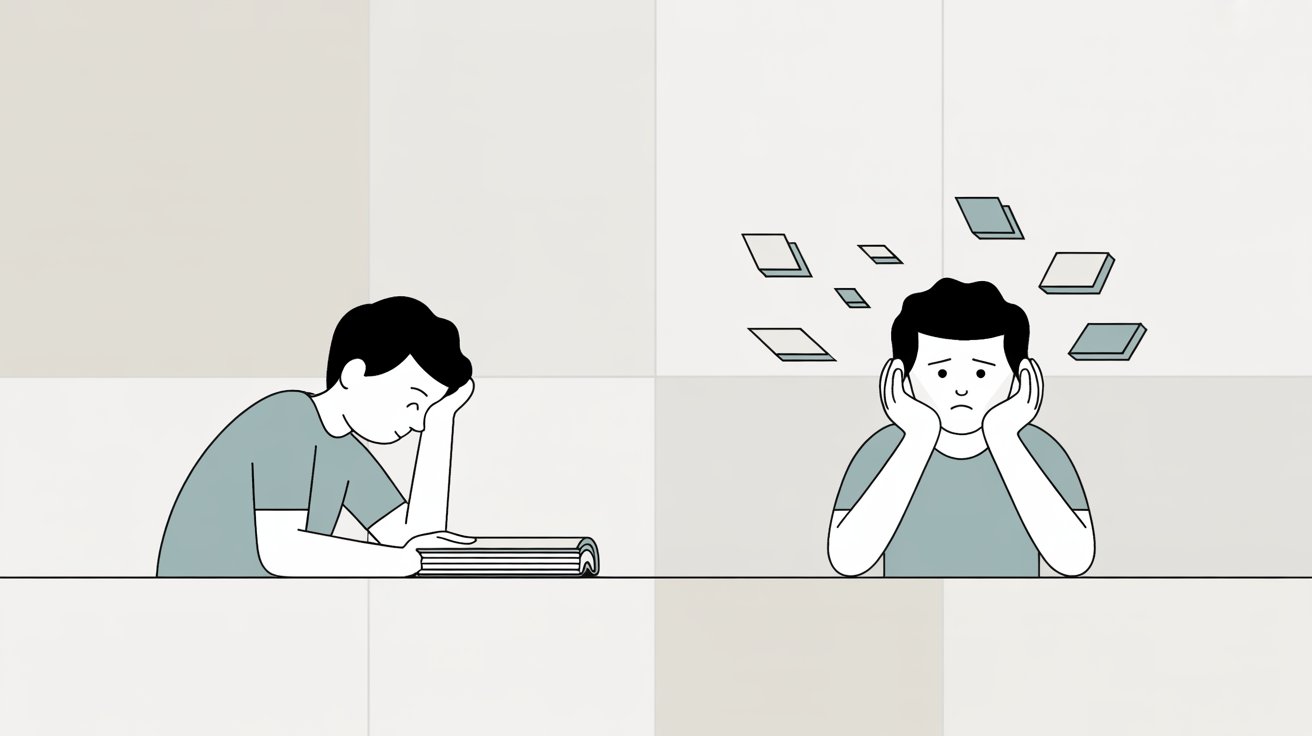
Most students spend hours reviewing notes, rereading textbooks, and watching recorded lectures. These activities consume time and require attention. The problem is that they fail to build the kind of memory required for exams or practical application.
Passive studying includes rereading notes multiple times, watching lectures without pausing to recall information, and highlighting text without testing yourself afterward. Students rely on these methods because they require low effort and create the appearance of progress. They fit into busy schedules more easily than other methods.
The failure happens because passive studying creates familiarity without retrieval. When you reread material, your brain recognizes it. Recognition produces the sensation of understanding. Being able to recognize something does not mean you can retrieve it. During exams, you need to retrieve information without cues. Passive studying does not practice retrieval.
Many students study for hours and still perform poorly on tests. They report frustration because they believe they understood the material. The real problem is that familiarity replaced actual learning. This mismatch between perceived knowledge and actual performance is the direct result of passive studying methods.
What Passive Studying Actually Is
Passive studying means exposing yourself to information without forcing your brain to retrieve it. It includes any activity where you consume material but do not test your memory.
The key difference is between exposure and learning. Exposure means you see or hear information again. Learning means your brain works to pull that information from memory. Passive studying prioritizes exposure.
When you reread a paragraph, you recognize the words and ideas. This recognition creates the sensation of understanding. You interpret the material as known because it appears familiar. But familiarity does not mean you can recall it when needed.
This confusion persists across subjects because students interpret the sensation of recognition as knowledge. The brain does not distinguish between these two states during the study session. The difference only becomes clear during exams when retrieval is required.
Why Passive Studying Fails to Build Memory
Passive studying fails because it does not activate the mental processes required for long-term retention. Three core problems prevent memory formation.

No Active Recall
When you reread notes or watch lectures, your brain does not retrieve information. It simply recognizes what it sees. Memory strengthens through retrieval, not recognition.
Each time you force your brain to recall information, you reinforce the neural pathway to that memory. Without retrieval, the pathway remains weak. Passive studying skips this step.
Recognition produces the sensation of knowledge because the information appears familiar. But this familiarity disappears quickly. During exams, you cannot rely on seeing the information again. You need to retrieve it independently.
No Mental Effort
Passive studying requires low cognitive engagement. Your brain remains in a passive state while processing material. Learning systems that encode long-term memory need active effort to activate.
When studying produces low difficulty, your brain is not processing deeply enough to form strong memories. Higher difficulty during learning signals deeper processing. Passive methods avoid this difficulty.
The result is superficial processing. Information enters short-term memory but does not transfer to long-term storage. Without mental effort, retention remains weak.
Illusion of Competence
Familiarity creates inaccurate confidence. After rereading notes multiple times, the material appears easy. Students interpret this as evidence they have learned it.
This illusion causes students to stop studying too early. They believe they are prepared because the material appears familiar. They do not test themselves to confirm actual recall ability.
The problem surfaces during exams. Questions require retrieval without cues. Students realize they cannot answer questions they thought they understood. The gap between perceived knowledge and actual ability becomes clear at that point.
This confusion between feeling familiar and actually knowing the material is explained in why students confuse familiarity with understanding.
How Passive Studying Leads to Poor Memory Retention
Passive studying creates specific retention problems that prevent effective learning. These consequences repeat across study sessions.
Fast Forgetting After Study Sessions
Information studied passively fades quickly. Without retrieval practice, memory consolidation remains weak. The brain discards information that is not actively reinforced.
Students often forget material within hours of studying. They need to restudy the same content repeatedly. This cycle continues because the underlying cause is not addressed.
Short-lived memory traces do not support exam performance. Even if information appears familiar during review, it disappears when needed.
Inability to Apply Information
Passive studying prepares students to recognize information, not use it. During exams, questions require application and problem-solving. Recognition alone does not provide these abilities.
Students fail questions that test understanding in unfamiliar formats. They know the material appeared familiar during study but cannot answer when the question is phrased differently.
This gap between recognition and application occurs frequently. Students report studying adequately but cannot demonstrate knowledge when tested.
This same pattern is why study notes feel useful but fail in exams, even though they seem clear during review.
Repeated Relearning Cycles
Because passive studying does not build long-term retention, students restudy the same topics repeatedly. Each review session produces activity, but no lasting improvement occurs.
This pattern consumes time and produces frustration. Students spend hours on the same material without progress. They do not identify the method itself as the problem.
Without retrieval practice, memory does not strengthen. The cycle continues until students change their approach or accept poor retention as standard.
Common Passive Study Methods Students Overuse
Certain study methods dominate student behavior despite their ineffectiveness. Recognizing these habits helps identify what to replace.
Rereading Notes or Textbooks
Rereading requires minimal effort. Students assume repeated exposure builds memory. This assumption is incorrect.
Each reread creates temporary familiarity. The information appears easier because you have seen it before. But this familiarity does not translate to recall ability.
Rereading fails because it does not force retrieval. Your brain remains in recognition mode. When exams require recall, the memory pathway does not exist.
Highlighting and Underlining
Highlighting creates the appearance of activity. Students believe marking important information helps learning. The problem is that highlighting involves no retrieval.
You identify what appears important and mark it. This requires recognition, not recall. Your brain does not practice retrieving the information.
Visual effort is mistaken for mental effort. Highlighting appears productive but does not strengthen memory. The activity provides the sensation of progress without learning.
Watching Lectures Without Interaction
Watching recorded lectures or videos allows passive consumption. Students watch content without pausing to recall or test themselves.
This method prioritizes consumption over processing. Information enters your awareness but does not engage deeper learning systems. No memory strengthening occurs.
Students often watch lectures at high speed to save time. This increases passive consumption and decreases retention further.
How to Fix Passive Studying
Fixing passive studying requires replacing recognition-based methods with retrieval-based methods. The following changes build actual memory.
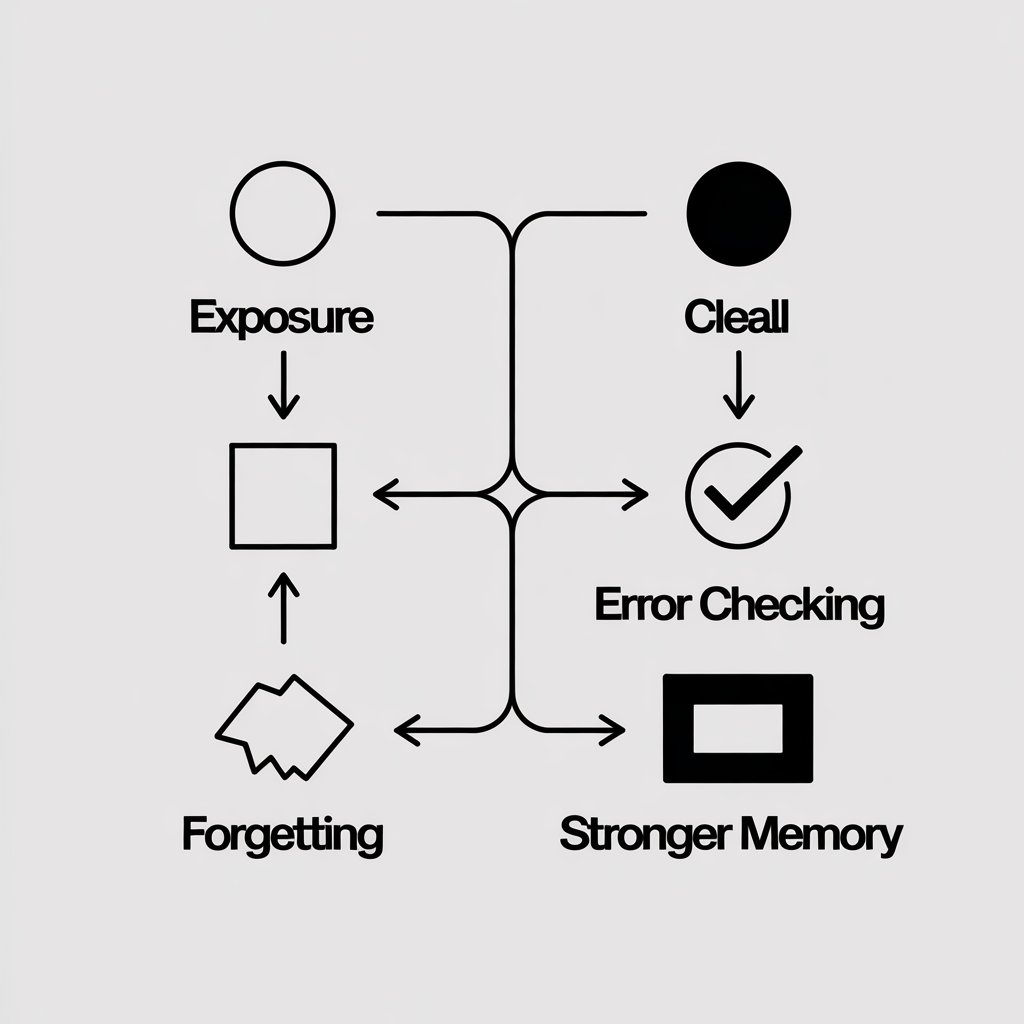
Replace Rereading With Active Recall
Put your notes away and list everything you can recall about the topic from memory. Do this from memory without looking.
After writing, check your notes to identify what you missed or got wrong. Plan the next study session around what you missed. This forces retrieval and exposes weak areas.
Retrieval strengthens memory more than rereading. The difficulty that occurs during recall indicates deeper processing is happening.
If rereading has been your default habit, this guide shows how to remember what you study without re-reading by using retrieval instead.
Use Short Self-Testing Cycles
Structure study sessions as cycles. Study material briefly, then test yourself immediately. Review the test results and correct errors.
Repeat this cycle multiple times during each session. Frequent low-stakes testing builds retention faster than long passive reviews.
Testing does not need to be formal. Write questions for yourself or explain concepts without notes. Any retrieval activity functions here.
Add Simple Retrieval Prompts
Create simple prompts that force recall. Turn headings into questions. Use prompts such as “Explain X from memory” or “Write the steps for Y without referring to notes.”
Use these prompts at the start of each study session. Answer them from memory before reviewing material. This activates retrieval immediately.
Prompts keep study sessions focused on recall. They prevent passive rereading from taking over the session.
Study in Short, Focused Blocks
Limit study blocks to 20-30 minutes. End each block with a recall test. Do not move to new material until you can recall the previous section.
Time limits create urgency and prevent passive reviewing. Forced recall at the end of each block ensures you practice retrieval consistently.
Short blocks also reduce fatigue. Active recall requires more mental effort than passive studying. Shorter sessions maintain processing quality.
Better Alternatives to Passive Studying
Several active learning methods replace passive studying effectively. These alternatives prioritize retrieval and mental effort.
Active Recall
Active recall means retrieving information from memory without cues. Close your notes and try to explain the topic out loud or in writing.
This differs from passive review because it forces your brain to search for information. The search process strengthens memory pathways.
Active recall works for any subject. It requires no tools or complex setups. The only requirement is testing yourself without looking at material.
Spaced Review
Spaced review means testing yourself on material at increasing intervals. Review today, tomorrow, then three days later, then a week later.
Spacing works because it forces retrieval when memory starts to fade. This difficulty strengthens long-term retention.
You do not need external systems to use spacing. Schedule review sessions at increasing intervals. Test yourself during each session.
Practice-Based Learning
Practice-based learning means solving problems or answering questions instead of reviewing content. Use past exams, problem sets, or practice questions.
This method forces application, not just recall. You learn to use information in context. This transfers better to exam situations.
Explaining concepts out loud to yourself or someone else also functions as practice. Explaining forces retrieval and exposes gaps in understanding.
How to Transition Away From Passive Studying
Switching from passive to active studying produces higher difficulty at first. Active methods require more mental effort. This occurs because retrieval demands more cognitive processing than recognition.
Passive studying produces low effort. Active recall produces higher effort. The higher effort level signals that deeper processing is occurring.
Many students abandon active methods because they produce more difficulty. They return to passive methods that produce lower effort. This prevents the retention improvement from occurring.
Judge progress by testing yourself, not by how material appears during review. If you can recall information without notes, retention is occurring. If material only appears familiar, retention is not occurring.
What to Stop, What to Start, and What to Do Next
Stop rereading notes or textbooks without testing yourself. Rereading creates familiarity, not memory. Replace it with recall from memory.
Stop highlighting without testing yourself afterward. Highlighting alone does not build retention. Add a recall test after each study session.
Stop watching lectures passively without pausing to retrieve information. Passive watching does not strengthen memory. Pause frequently to recall key points.
Start self-testing during every study session. Write everything you can remember first, then check your notes. This builds retrieval pathways.
Start writing from memory. Explain topics without looking at material. Check your explanation for accuracy afterward.
Start immediate error checking. After each recall attempt, review what you missed. Focus your next session on those gaps.
Replace one passive habit in your next study session. Choose active recall instead of rereading. Test the retention difference yourself.