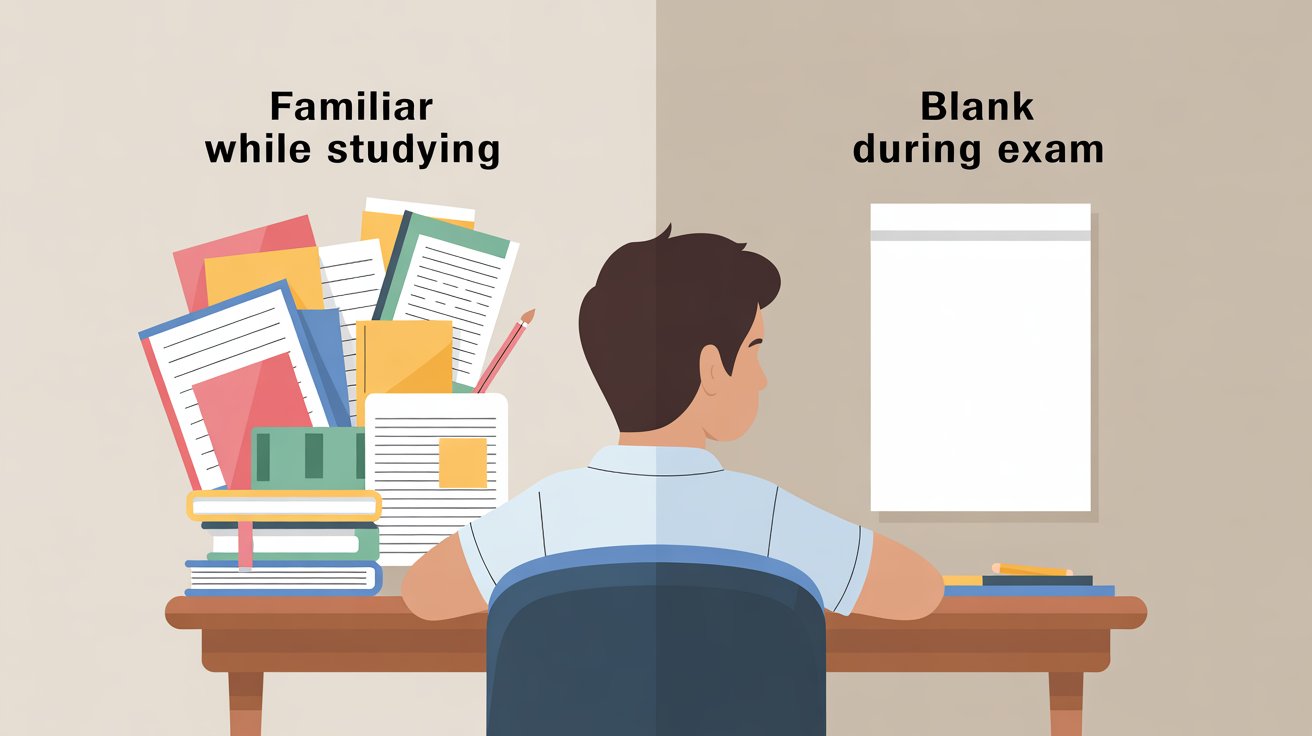
Most students spend hours studying using methods that feel productive. They highlight textbooks, rewrite notes, and review material multiple times. These activities create a sense of progress because they require time and effort.
The problem is that effort does not equal learning. Many common study methods produce temporary familiarity without building actual understanding. Students finish their study sessions feeling prepared, but struggle during exams when they need to recall or apply what they learned.
This gap between study effort and exam performance is not caused by lack of motivation or intelligence. It happens because students rely on study methods that feel effective but do not match how memory and understanding actually work. These methods are common, widely recommended, and socially accepted, which makes them difficult to question.
The real issue is that most study mistakes are invisible during the study process itself. They only become clear when it is too late to fix them. Students repeat these mistakes because the methods feel normal, and the failure only shows up later during tests or practical application.
The Hidden Problem With Common Study Mistakes
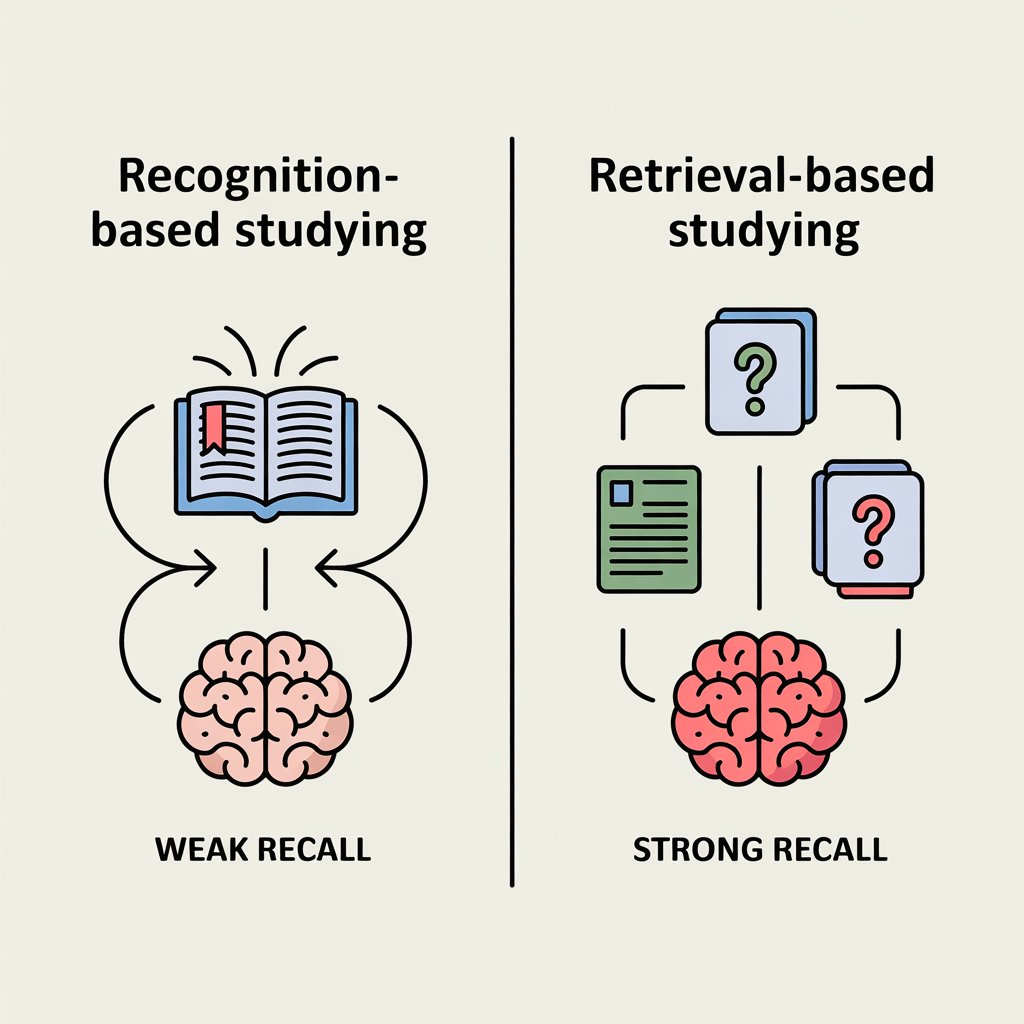
Study mistakes persist because they do not feel like mistakes while they are happening. When a student highlights a paragraph or rereads a chapter, the material becomes more familiar. This familiarity creates confidence. The student feels like they know the content because they recognize it.
Recognition and understanding are not the same thing. Recognition happens when you see information and it feels familiar. Understanding happens when you can retrieve information without seeing it and explain how it works. Most common study methods build recognition but not understanding.
The distinction matters because exams test understanding, not recognition. During a test, students must recall information without prompts and apply concepts to new situations. If their studying only built recognition, they experience confusion and memory failure during the exam even though the material felt clear during study sessions.
This is why students often say the test was unfair or harder than expected. The test difficulty did not change. Their study method prepared them for the wrong task.
Why Students Don’t Notice These Study Mistakes
Some study habits feel productive while studying, even though they do not create the type of learning required for exams or application.
Mistake 1: Mistaking Recognition for Understanding
When students read or review material, their brain recognizes familiar concepts. This recognition feels like knowledge because the information seems clear in the moment. The student can follow the explanation and nods along while reading.
The problem appears during retrieval. When the textbook closes and the student tries to explain the concept from memory, the clarity disappears. The familiarity they felt during reading was not evidence of learning. It was evidence that the explanation made sense while they were looking at it.
Without testing retrieval during the study session, students have no way to know whether they actually learned the material or just recognized it.
This confusion between feeling familiar and actually understanding is explored in detail in why students confuse familiarity with understanding
Mistake 2: Repeating Easy Methods That Reduce Effort
Students naturally prefer study methods that feel smooth and comfortable. Rereading notes, highlighting text, and reviewing summaries all require low cognitive effort. The brain does not struggle, which makes the activity feel productive and efficient.
Learning requires cognitive effort. When the brain works to retrieve information, rebuild explanations, or connect concepts, it
strengthens memory and understanding. Methods that feel easy do not create this effort, which means they do not create strong learning.
Students avoid harder methods because they feel inefficient or frustrating. In reality, the difficulty is the mechanism that makes learning happen.
This pattern is explained further in why passive studying leads to poor retention, where effort feels high but memory remains weak.
Mistake 3: Studying Without Clear Learning Goals
Many students measure progress by how much material they covered rather than what they can now do. They finish a chapter, complete a set of notes, or study for a certain number of hours. These are input-based goals.
Learning is measured by output, not input. The relevant question is not how much time was spent or how many pages were read. The question is whether the student can now explain concepts, solve problems, or apply knowledge without help.
Without output-based goals, students have no way to know when they are actually finished studying. They stop when they run out of time or material, not when they have achieved understanding.
What These Study Mistakes Actually Cause
Continuing these habits leads to specific learning problems that affect recall, exam performance, and the ability to apply concepts correctly under pressure.
Weak Recall During Exams
Students who rely on recognition-based study methods experience memory failure during exams. They see a question and feel like they know the answer, but cannot retrieve the specific information needed to respond accurately.
This happens because their study method never tested retrieval. The information exists in memory in a form that requires external prompts to access. Without the textbook or notes present, the memory does not activate.
Poor Application of Concepts
Understanding requires the ability to transfer knowledge to new situations. Students who study by rereading and reviewing often cannot apply what they learned to problems that look different from the examples they studied.
This happens because their study method focused on absorbing information rather than manipulating it. Application requires flexible understanding, which only develops through practice using concepts in varied contexts.
Increased Study Time With No Improvement
When students rely on ineffective methods, they respond to poor results by studying more hours using the same approach. This creates a cycle where effort increases but performance does not improve.
The problem is not the amount of time spent studying. The problem is that more time using a flawed method produces more familiarity but not more understanding. The student feels like they are working harder, but the work does not match what learning requires.
This is why increasing study time often fails, as explained in why studying more hours doesn’t improve results.
How to Fix These Study Mistakes
The specific study actions students can apply immediately to correct ineffective habits and align their study process with how learning actually works.
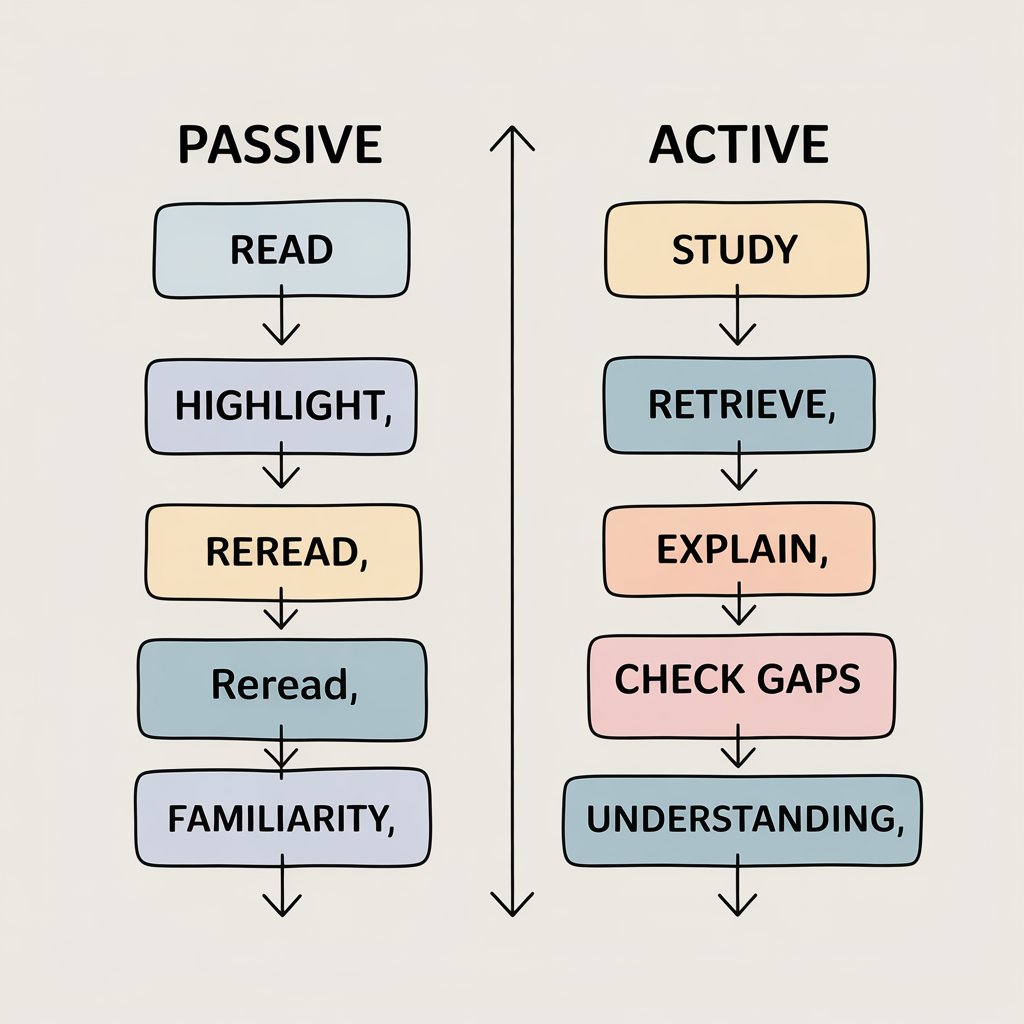
Fix 1: Replace Re-reading With Active Recall
Active recall means testing yourself by retrieving information from memory without looking at notes or textbooks. Close the material and write or say everything you remember about a topic. Check your accuracy afterward.
Do this immediately after finishing a section and again after delays of one day, three days, and one week. The effort required to retrieve information is what builds strong memory.
When retrieval fails, note the specific gaps and return to the material only to fill those gaps. Then test retrieval again. The goal is not to review until the material feels familiar. The goal is to practice retrieval until it succeeds consistently.
Fix 2: Study by Explaining, Not Reviewing
Explain concepts out loud as if teaching someone who knows nothing about the topic. Do this without notes. When the explanation breaks down or becomes vague, that is where understanding is weak.
Mark the breakdown point and return to the material to rebuild understanding of that specific part. Then explain the entire concept again from the beginning. Repeat until the explanation is complete and accurate without any prompts.
This method forces the brain to organize information, identify connections, and build explanations rather than passively absorbing content. The difficulty of explaining is what creates understanding.
Fix 3: Set Understanding-Based Study Targets
Define what you should be able to do after studying a topic. Write specific outputs like solve this type of problem, explain this process without help, or connect these three concepts.
Study until you can produce those outputs consistently. Stop when the targets are achieved, even if it takes less time than planned. Continue if the targets are not met, even if you run out of material to review.
This shifts focus from covering content to achieving understanding. It also provides clear feedback about whether studying is working.
Better Alternatives to Common Ineffective Study Habits
Ineffective study habits to replace, what to use instead, and why the alternative methods produce stronger recall and understanding.
Instead of Highlighting → Use Question Lists
Convert each section of material into a list of questions that test the key concepts. Write the questions while reading, then close the material and answer them from memory.
This forces active engagement with the material and creates a retrieval practice tool. Highlighting marks information as important but does not require the brain to process or organize it. Writing questions requires the brain to identify what matters and how to test understanding of it.
Instead of Passive Notes → Use Retrieval Notes
After reading or attending class, close all materials and write notes from memory. Include definitions, explanations, and connections between concepts. Then check for accuracy and completeness.
Retrieval notes are difficult to write because the brain must reconstruct the information rather than copy it. This difficulty is what makes them effective. Passive notes feel easier because they only require transcription, but they do not build memory or understanding.
What to stop doing, what to start doing, and next steps
Stop measuring study progress by time spent or pages covered. Stop rereading material when it feels familiar. Stop using study methods that feel comfortable and easy.
Start testing understanding during every study session, not just before exams. Start using methods that require cognitive effort even when they feel inefficient. Start setting clear output-based goals that define what you should be able to do after studying.
The shift from input-focused to output-focused studying is the most important change. Everything else follows from this.
Review your current study routine and identify which methods rely on recognition rather than retrieval. Choose one ineffective habit and replace it with an active method for one week.
Track whether you can explain concepts or solve problems without help. If you cannot, adjust the method or increase retrieval practice. If you can, add another replacement and continue building better habits.
Study mistakes are fixable once they become visible. The goal is not to study harder, but to study in ways that match how learning actually happens.