
Students rely on rereading notes, highlighting key points, and watching explanations multiple times because these methods feel efficient. They require less time and create a sense of progress.
When material looks familiar during review, students assume they have learned it. The problem is that ease and recognition are not the same as understanding. Recognition happens when you see information and identify it.
Understanding happens when you can retrieve and use information without prompts. Most students stop studying once material feels familiar. They mistake the comfort of recognition for actual comprehension. This failure becomes obvious during exams when recall is required.
By then, there is no time to rebuild understanding correctly. The gap between study confidence and exam performance is not random. It comes from confusing familiarity with understanding.
The Learning Failure: Recognizing Information Instead of Understanding It
The core failure is simple. Students confuse recognition with understanding. Recognition means identifying information when you see it in front of you.
Understanding means retrieving and using information without any cues or prompts. Students review material until it looks familiar, then they stop.
Familiarity during review creates false confidence. Speed and fluency while reading notes feel like mastery. The brain processes familiar material quickly, and this ease feels like progress.
The failure happens when students treat “I’ve seen this before” as proof that they can use the information. These are not the same thing. Recognizing a concept in your notes does not mean you can recall it during an exam. It does not mean you can apply it to a new problem. It does not mean you can explain it without looking.
The gap between recognition and understanding only appears when retrieval is required. During exams, students face questions without their notes. The familiarity they relied on disappears. What felt easy during review becomes impossible under test conditions.
Why Familiarity Feels Like Understanding
Several cognitive factors make familiarity feel identical to real understanding. This is why learning often feels easy but doesn’t stick, even after repeated review sessions.
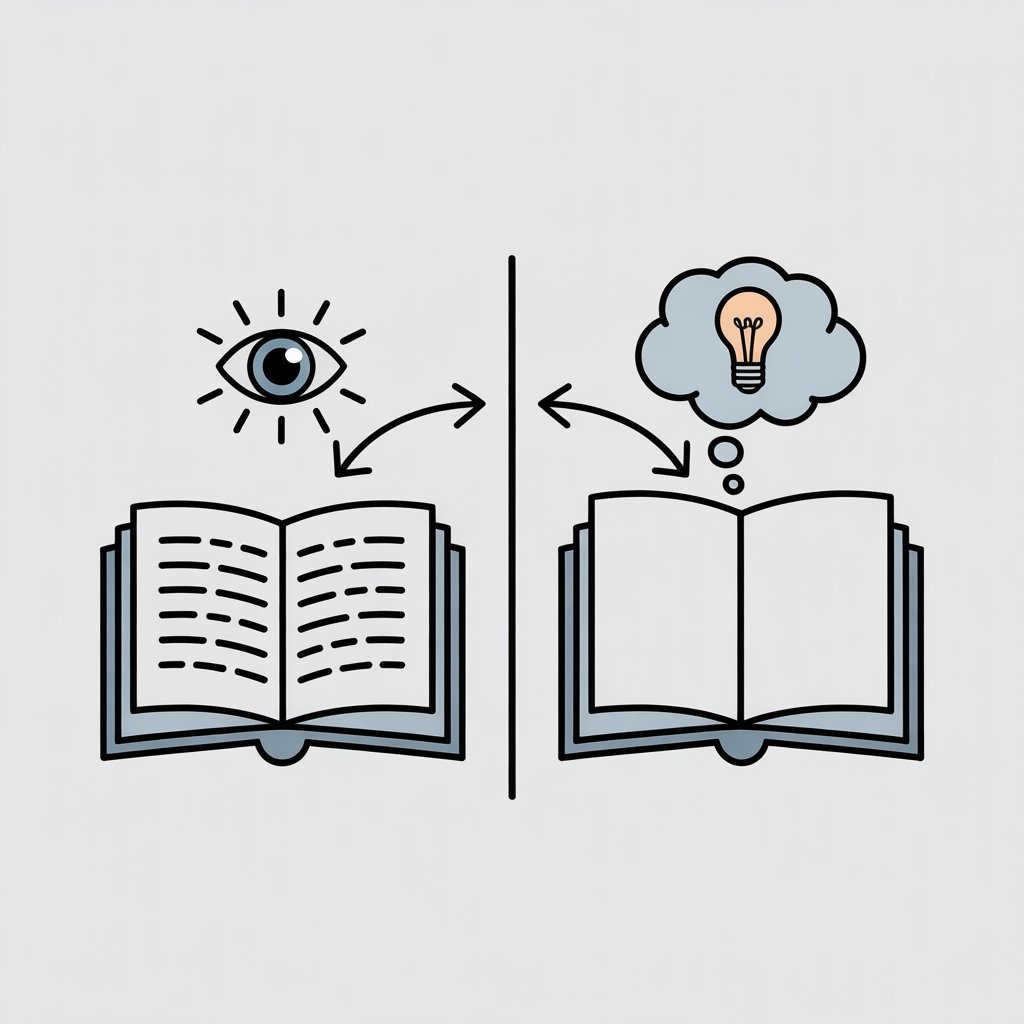
Recognition Is Easier Than Recall
Recognition requires matching information to something visible in front of you. Recall involves pulling information from memory on your own, without relying on hints or prompts.
Recognition is always easier and faster than recall. Rereading notes relies entirely on recognition. You see the information, and your brain confirms that it looks familiar.
Students mistake this ease for memory strength. When review feels smooth and quick, they assume they will remember the material later. This creates false certainty about exam readiness. The reality is different. Recognition does not test whether you can retrieve information when it is not visible.
Repeated Exposure Lowers Mental Effort
Each time you review material, your brain processes it faster. Reduced effort is interpreted as improved understanding.
The brain treats familiar information differently than new information. It requires less resistance and less energy. Students confuse this cognitive ease with mastery. Lower effort feels like learning progress.
The assumption is that if something feels easier, you must understand it better. The reality is that effort decreased, but memory strength did not increase proportionally. Faster processing is not the same as stronger retention. Ease during review does not predict performance during recall.
The Illusion of Competence
The illusion of competence occurs when students overestimate their understanding based on familiarity. Familiarity triggers confidence without testing actual retrieval ability.
Students stop checking their understanding once material feels comfortable. This illusion is strongest immediately after review sessions. The material is still fresh, and recognition is at its peak. Without retrieval practice, students cannot detect their own knowledge gaps.
They have no way to know whether they can recall information without cues. The illusion breaks during exams when recall is required under pressure. Questions that seemed straightforward during review become impossible.
Students are confused because the material felt so clear just days before. By the time the illusion breaks, there is no time to rebuild understanding correctly.
What Happens When Students Rely on Familiarity
Relying on familiarity instead of understanding creates three predictable failures.
Poor Exam Performance
Exams require recall, not recognition. Students who reviewed passively cannot retrieve information without cues in front of them.
Questions that seemed simple during review become impossible during tests. The format changes from “Does this look right?” to “What is the answer?” Students stare at questions and feel blank.
The gap between study confidence and actual performance is large and frustrating. Students are surprised by their results despite feeling prepared before the exam.
This pattern is common in passive studying which leads to poor retention despite long study hours.
Inability to Apply Knowledge
Familiarity-based learning collapses when question formats change. Students can recognize concepts in the exact way they reviewed them, but they cannot use those concepts in new contexts.
Application requires flexible understanding, not memorized patterns. Problems that require combining multiple ideas or transferring knowledge to unfamiliar situations expose the weakness immediately.
Students describe feeling blank or confused despite “knowing” the material. They can recall definitions but cannot solve problems. They recognize the topic but cannot answer questions that require thinking beyond what they memorized.
Last-Minute Cramming Cycles
False confidence from familiarity delays serious study. Students assume they are ready because review felt easy and smooth. They move on to other tasks.
Panic sets in close to exams when practice tests or assignments reveal gaps. Students realize they cannot actually recall or apply what they reviewed.
Cramming begins too late to build real understanding. There is no time left for proper retrieval practice or application testing. The cycle repeats because the root problem is never addressed. Students continue relying on familiarity in the next course or semester.
How to Replace Familiarity With Real Understanding
Four methods force students to test understanding instead of assuming it. These strategies are explained step by step in how to remember what you study without re-reading.
Force Recall Before Review
Close all notes and materials completely before you start reviewing. Attempt to write down or explain everything you remember about the topic.
Do not check your notes until recall is finished. Struggle during recall is the goal. It reveals actual memory strength and exposes gaps. Gaps that appear during recall show what needs real study, not more rereading.
Reviewing after recall is more efficient because your focus goes directly to weak areas instead of rereading everything. Recall attempts strengthen memory more than rereading ever can.
Each time you force retrieval, you rebuild the pathway to that information. The difficulty of recall is not a sign of failure. It is the method working correctly.
Explain Ideas in Your Own Words
Write or speak explanations without copying from your notes. Restating concepts in your own words forces processing beyond recognition.
If you cannot explain something simply without looking, you do not understand it yet. Explanation exposes weak understanding immediately.
Weak spots become obvious when you try to connect ideas without a script. Gaps in explanation show where familiarity replaced actual comprehension.
You may recognize a term, but explaining how it works or why it matters reveals whether you truly understand. Fixing these gaps requires rethinking the material, not rereading it. Once you can explain clearly without notes, understanding is confirmed.
Use Delayed Self-Testing
Testing yourself immediately after review is nearly useless. Immediate testing relies on short-term memory, not long-term retention.
Information is still active in your working memory, so retrieval feels easy. Wait at least several hours or one day before testing yourself.
Delayed testing reveals whether information stuck or just felt familiar temporarily. If recall fails after a delay, the material was never truly learned. It was only temporarily accessible.
Delayed testing is uncomfortable but accurate. It shows real memory strength, not temporary recognition. Results from delayed tests guide what actually needs more work. You stop wasting time reviewing things you already know and focus on what you cannot retrieve.
Check Understanding Through Application
Solve new problems or answer questions you have not seen before. Application reveals whether understanding is flexible or rigid. Change the context or format of questions to test transfer.
If knowledge only works in the exact format you reviewed, it is brittle and will fail under exam conditions. Real understanding allows you to use information in unfamiliar situations.
Application practice prepares you for the variations and twists that appear on exams. Problems that combine multiple concepts test deeper understanding.
Struggling with application is normal. It shows where real learning is happening, not where you are failing.
Better Study Methods That Prevent the Illusion
Two comparisons show why active methods work and passive methods fail.
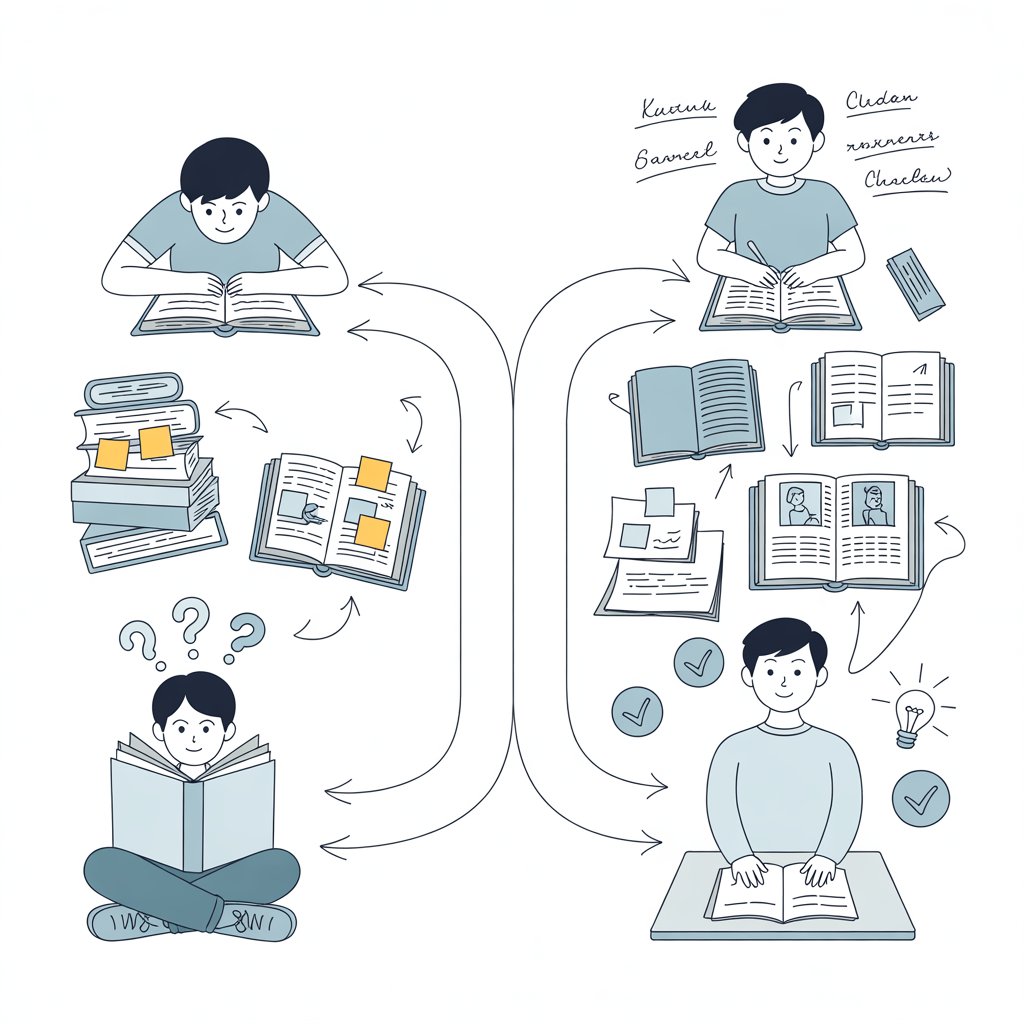
Passive Review vs Active Retrieval
Passive review includes rereading notes, highlighting, and watching videos again. Passive methods create familiarity without testing memory. They feel productive because you are doing something, but they do not challenge retrieval.
Active retrieval includes forcing recall, self-testing, and explaining without notes. Retrieval requires effort and exposes gaps immediately. There is no way to hide weak understanding during retrieval practice.
Passive review feels easier and more comfortable at the moment. Active retrieval feels harder and less satisfying while you are doing it. The difficulty of retrieval is what builds memory strength. Students avoid retrieval because it feels like failure when it is actually progress.
Highlighting vs Structured Recall Notes
Highlighting feels productive because it involves action and decision-making. You are marking important points and organizing visually.
The problem is that highlighted notes still rely on recognition during review. You read highlighted sections and confirm they look familiar.
Structured recall notes are created from memory after studying a section. You close your materials and write down what you remember in an organized format. Recall notes force processing and expose weak spots while you are creating them.
Writing recall notes is slower but tests understanding as you go. Highlighting delays the moment when gaps are discovered until much later.
Recall notes reveal gaps immediately, when there is still time to fix them. The product of recall notes is also more useful for later review because it reflects what you actually retained, not what looked important.
What to Stop, What to Start, and What to Do Next
Stop rereading notes to feel prepared for exams. Stop judging learning progress by how easy review feels. Stop assuming familiarity means understanding. Stop testing yourself immediately after review.
Start recalling information without looking at notes first. Start testing yourself after delays, not immediately. Start explaining ideas in your own words to check comprehension. Start solving new problems to test applications.
Start using difficulty during study as a signal of progress, not failure.
In your next study session, close your notes before starting any review. Attempt recall for five minutes before reviewing anything.
Write what you remember on paper or explain it out loud. Then check your recall against your notes. Use the gaps that appear during recall to guide what you study next. Focus on areas where recall failed, not areas that felt familiar.
Before finishing the session, test yourself on one new problem or unfamiliar question format. If you can solve it without help, move forward. If you cannot, review the concept again and retest after a delay of several hours or one day.