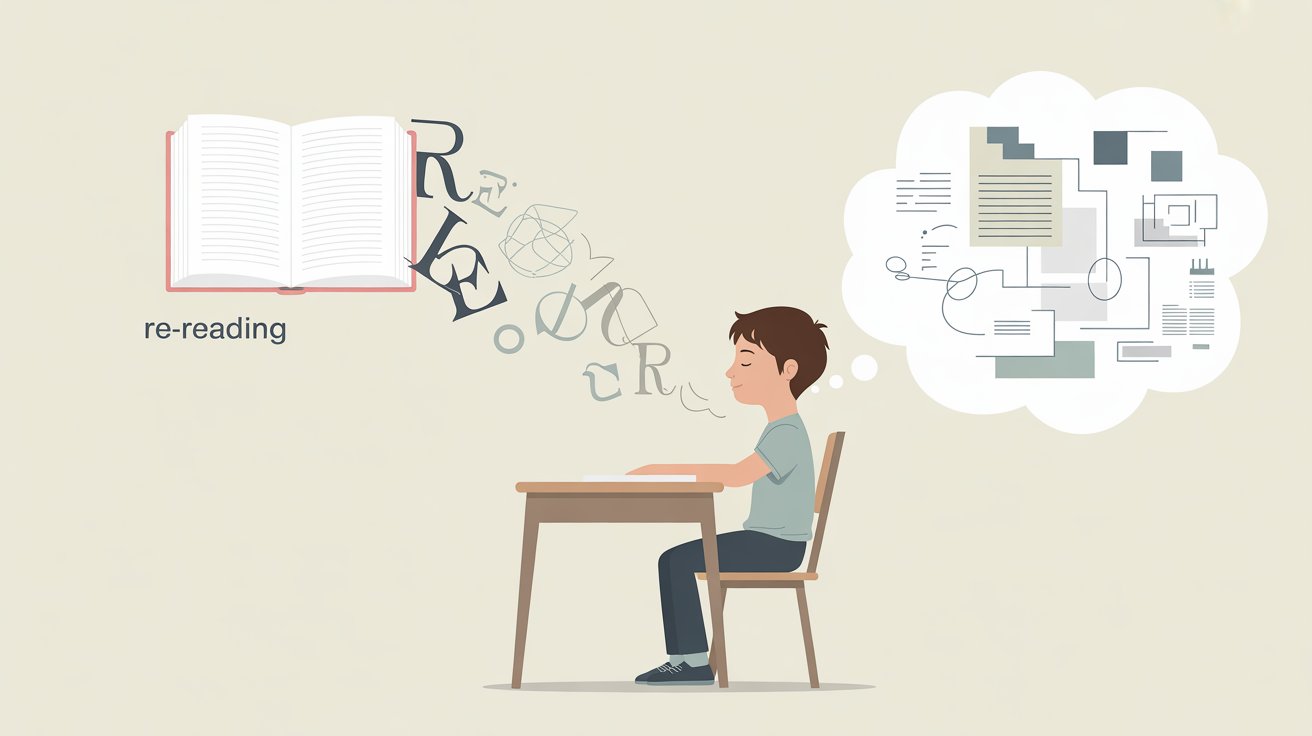
Most students re-read their notes and textbooks when studying. It feels productive because the material looks familiar after the second or third pass. The words make sense. The structure feels clear. Students assume this familiarity means they have learned the material.
But familiarity is not the same as understanding. Recognition is not the same as recall.
Re-reading gives students a false sense of confidence. The information feels accessible when it is right in front of them. But during exams, when the notes are gone and the question is new, nothing comes back. The memory is not there. The retrieval fails.
This happens because re-reading does not build memory. It only strengthens recognition. Students can recognize information they have seen before, but they cannot retrieve it when needed. That is the core learning problem.
This article explains why re-reading fails, what happens if you keep using it, and how to remember what you study using methods that actually build retrieval strength.
The Core Problem With Re-Reading
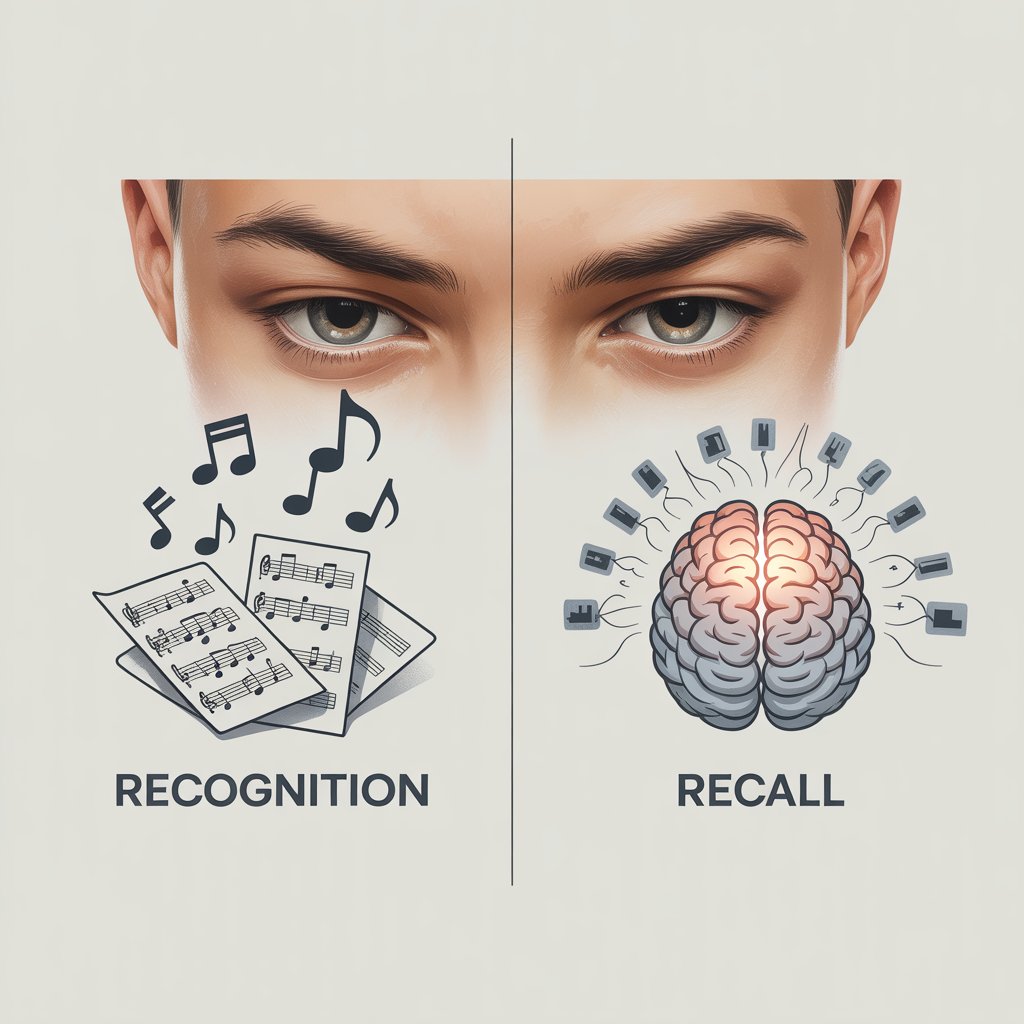
Re-reading fails because it does not require retrieval. When you look at your notes again, the information is already there. Your brain does not need to search for it. You are simply recognizing what you see.
Recognition and recall are two different processes. Recognition happens when you see something and realize you have seen it before. Recall happens when you retrieve information from memory without any external cues.
Exams and problem-solving require recall, not recognition. You need to pull information out of your memory when nothing is in front of you. But re-reading only trains recognition. It does not build the pathways needed for recall.
Students feel confident after re-reading because the material looks familiar. But when they sit down to answer questions, the retrieval fails. The information was never stored in a way that allows access without cues.
This is the same reason passive studying leads to poor retention, even when students spend long hours reviewing material.
Why Re-Reading Fails to Build Memory
Re-reading does not create strong memory because it lacks the conditions required for encoding and retrieval. Memory requires effort, structure, and independent access.
Passive Exposure Does Not Create Retrieval Paths
Memory works through retrieval. Every time you successfully recall a piece of information, you strengthen the pathway to that memory. The more you retrieve it, the easier it becomes to access later.
Re-reading does not involve retrieval. You are not pulling information out of memory. You are simply seeing it again. Without retrieval, no pathway is strengthened. The memory remains weak and inaccessible during recall situations.
No Effort Means No Encoding Strength
Encoding refers to how information is stored in memory. Strong encoding happens when the brain works to process and organize information. Effort during learning leads to better memory.
Re-reading requires almost no effort. The material is already organized on the page. Your brain does not need to work to make sense of it. Because the process is easy, the encoding is weak. Weak encoding leads to weak memory.
Context Dependency From Re-Reading
When you re-read notes, your memory becomes tied to the visual layout of the page. You remember where the heading was, how the bullet points looked, or where the diagram appeared. These are context cues.
During an exam, those cues are gone. The question is presented in a different format. Your memory cannot access the information because it was stored with dependencies on visual context. Without the page in front of you, the retrieval fails.
What Happens If You Keep Re-Reading
Students who rely on re-reading face predictable problems. These problems repeat across subjects and exams because the underlying issue is always the same.
Poor Recall During Exams
Students who re-read often experience blanking during exams. They recognize the topic when they see it in the question. They know they studied it. But they cannot retrieve the specific details needed to answer.
This happens because the memory was never stored in a way that allows independent recall. The information feels familiar, but familiarity is not enough to generate an answer.
This explains why study notes feel useful but fail in exams, creating confidence during study that collapses under exam conditions.
Inability to Apply Knowledge
Problem-solving and application require recall and manipulation of information. Students who re-read struggle with these tasks because they cannot access the information they need.
Even when they have studied the material multiple times, the problems feel new. They cannot connect what they studied to what the question is asking. The information is not retrievable in a usable form.
Increased Study Time With Lower Results
When re-reading does not work, students assume they need to study more. They re-read again. They spend more hours reviewing the same material. But the results do not improve.
More time spent re-reading does not fix the problem. The method itself is ineffective. Increasing the volume of ineffective study does not lead to better retention. It only increases frustration and wasted effort.
How to Remember What You Study Without Re-Reading
Effective retention comes from methods that force retrieval and effort during study. These methods build memory that can be accessed independently during exams and problem-solving.
Use Active Recall Instead of Review
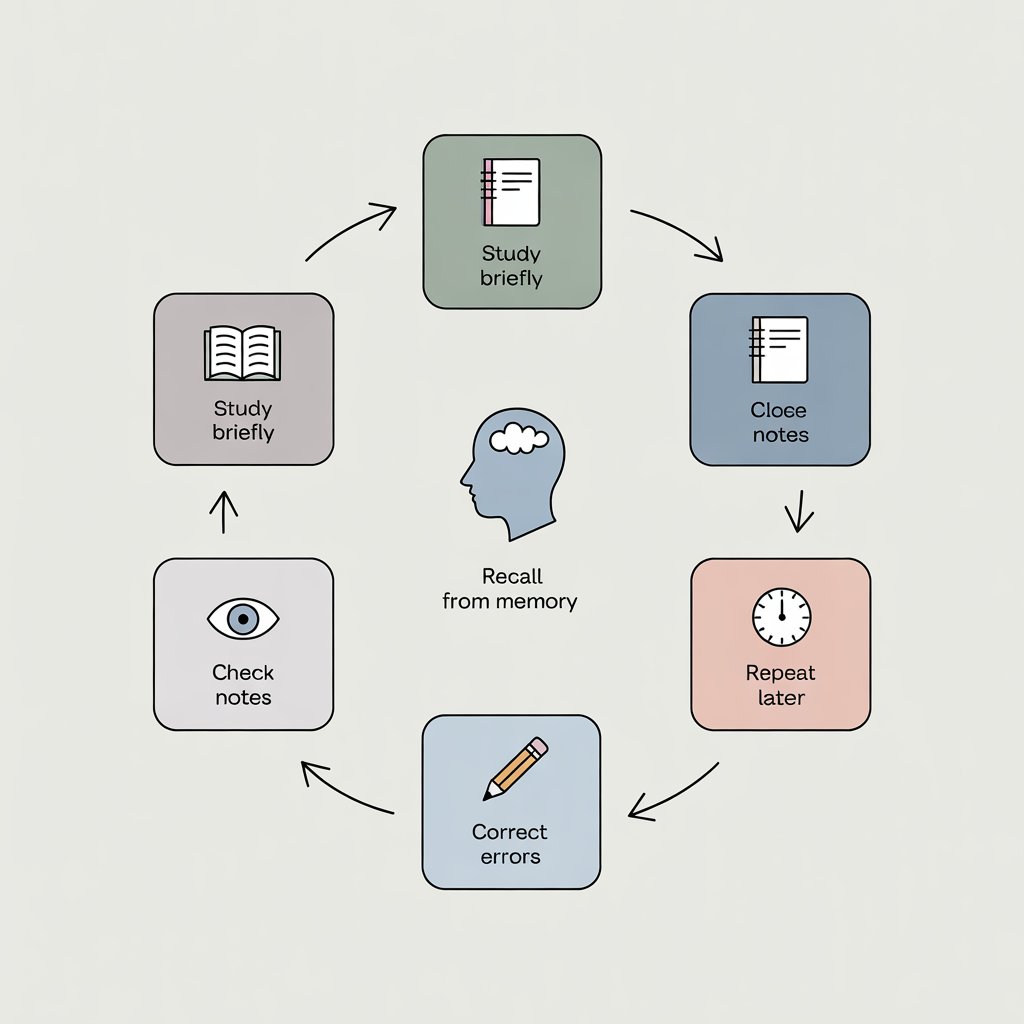
Active recall is the process of pulling information from your memory without checking your notes or study materials. You ask yourself a question, try to answer it, and then check if you were correct.
This method forces your brain to search for the information. The act of searching and retrieving strengthens the memory pathway. The more you practice active recall, the stronger and faster the retrieval becomes.
Start by closing your notes. Ask yourself what you just studied. Try to explain it out loud or in writing. Only after attempting recall should you check your notes to confirm or correct your answer.
Study in Question Form
Turn every heading, concept, and definition into a question before you study. Instead of reading “Types of Market Structures,” ask yourself “What are the types of market structures?”
Questions force retrieval. When you see a heading as a statement, your brain passively reads it. When you see it as a question, your brain actively searches for the answer. This shift from passive to active processing improves encoding and retention.
Write questions in a separate document or on flashcards. Use them as the basis for your study sessions instead of re-reading your notes.
Write From Memory, Then Correct
After reading a section, close your notes. Write down everything you remember about that section. Do not look back until you have written as much as you can.
Then open your notes and compare what you wrote to what was actually there. Correct mistakes. Add missing details. Mark what you forgot.
This process shows you exactly what you did not retain. It also forces effortful retrieval, which strengthens memory. The correction step ensures you do not reinforce errors.
Space Recall Sessions
Spacing means reviewing information at intervals instead of all at once. After your first recall session, wait a day before recalling the same material again. Then wait two days. Then a week.
Spacing works because it forces your brain to retrieve information after it has started to fade. This effortful retrieval rebuilds the memory stronger than it was before. Repeated spaced retrieval leads to long-term retention without extra study time.
These techniques work best when combined with a structured review process, as explained in how to review study material without cramming.
Re-Reading vs Effective Retention Methods
The difference between re-reading and effective methods is clear when you compare effort, process, and outcome.
Re-Reading vs Active Recall
Re-reading is passive. You look at the material and move on. Active recall is effortful. You retrieve the material from memory before checking.
Re-reading creates weak, context-dependent memory. Active recall creates strong, independent memory. During exams, active recall allows retrieval. Re-reading does not.
Highlighting vs Writing From Memory
Highlighting is another passive review method. You mark sentences while re-reading. But marking sentences does not require retrieval or effort. It does not build memory.
Writing from memory forces output. You must retrieve and organize information to write it down. Output-based study is harder than highlighting, but it produces retention that lasts.
Cramming vs Spaced Retrieval
Cramming means studying everything in one long session right before the exam. It creates short-term familiarity but no long-term retention. Students forget the material within days.
Spaced retrieval distributes study over time. Each session is shorter, but the intervals between sessions force stronger retrieval. Spaced retrieval builds memory that lasts weeks and months, not just hours.
How to Apply These Retention Methods in Daily Study
Changing from re-reading to active recall requires a clear process. Follow these steps to integrate retention methods into your study routine.
Before Studying
Before you start reading, prepare questions based on the chapter headings and topic list. Write them in a separate document or on cards. These questions will guide your recall sessions.
Do not spend time creating perfect questions. Simple, direct questions work. “What is X?” and “How does Y work?” are enough. Avoid re-reading while preparing questions. Use headings and topic names only.
During Study
Read the material once. Focus on understanding. After finishing a section, close your notes. Try to recall the key points and answer the questions you prepared. Put your answer on paper or say it out loud.
Only after attempting recall should you open your notes to check. Correct mistakes and fill in gaps. Spend 10 to 15 minutes per section on this cycle. Do not rush. Retrieval effort is more important than speed.
After Study
At the end of the day, do one more recall session for everything you studied. Do not re-read. Use your questions to test yourself. If you cannot recall something, mark it for review in the next session.
Check your notes only after attempting all questions. This last recall session reinforces what you studied before sleep, helping the information consolidate more effectively overnight.
What to Stop Doing and What to Start Doing
Stop re-reading full chapters after your first pass. Stop highlighting without testing yourself. Stop judging your learning by how familiar the material looks on the page.
Start recalling information before checking your notes. Start using active recall every time you study. Start reviewing through questions instead of passive reading.
Apply active recall to one subject this week. Use the process described above. Close your notes. Retrieve. Check. Correct. Repeat with spacing. Track what you forget and focus recall sessions on weak areas.
Memory improves when retrieval is practiced. Re-reading does not practice retrieval. Active recall does.